January 2026Serena Smith
Why water engineers are the next big hire for hyperscale projects
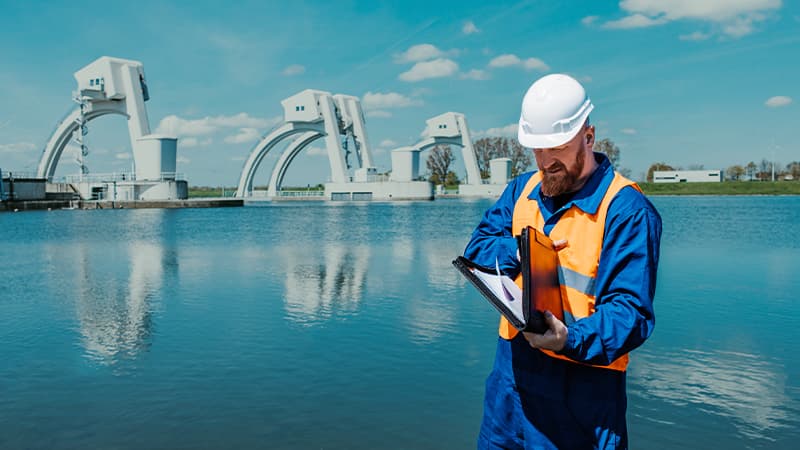
Water engineers now sit at the center of hyperscale expansion. As facilities grow in size and density, the water load tied to cooling increases at the same rate as broader MEP requirements. Water engineers run the systems that keep high density sites stable, efficient and compliant. They are also central to the shift toward liquid cooling, which is changing technical priorities and shaping new hiring needs. Hyperscale development no longer moves forward on electrical design alone. Strong water expertise is becoming a core requirement for project success.
For a wider view of how cooling trends shape talent demand, take a look at our recent article on preparing the workforce for liquid cooled data centers.
Rising cooling demand and the shift to liquid systems
AI workloads continue to push rack density higher, and traditional air cooling loses efficiency at these levels because airflow and heat rejection hit their limits. This is driving operators toward liquid and hybrid cooling systems that stabilise temperatures and lower energy use. As soon as liquid enters the equation, water moves to the center of both technical design and operational planning.
Across sites above 50 MW, teams are now reviewing closed-loop liquid systems, immersion cooling and direct-to-chip cooling. Each approach increases the need for accurate water modelling, precise chemistry control and strong coordination between civil, mechanical and environmental engineering. These requirements sit firmly within water engineering rather than general MEP design.
24% CAGR
Projected growth rate of liquid cooling adoption through 2029.
1–5 million litres per day
Water use range for large hyperscale data centre sites operating at scale.
What water engineers bring to hyperscale projects
Water engineers manage supply, treatment, flow and discharge from early planning onward. They assess utility constraints, local capacity, seasonal variation and demand risks. By addressing these factors up front, they prevent redesigns, delays and gaps in water availability. They also manage treatment chemicals, corrosion risk, scaling behaviour and interactions between water and mechanical components. Small chemistry issues can damage equipment or decrease cooling performance, so early technical decisions matter.
Their work strengthens design decisions and supports smoother delivery across the project lifecycle. For a deeper look at why skilled water professionals matter, read more here.
Liquid cooling raises the technical bar
Liquid cooling brings water into close contact with sensitive components. Contamination, scaling, oxygen intrusion or treatment imbalance can disrupt the loop and shorten equipment life. Cleanliness standards rise, and systems must withstand pressure changes and thermal stress without degrading water quality.
This increases demand for water engineers with strong knowledge of filtration, deionisation, oxygen control and treatment cycles. They also need the ability to run fault analysis and coordinate tightly with mechanical and process engineering teams. Traditional cooling experience does not cover the level of detail these systems require.
LVI Associates’ early placement activity in ultra clean liquid cooling
At LVI Associates, our talent team placed two directors into the first organisation to pioneer ultra-clean liquid cooling for high density data centers. These roles called for advanced water treatment expertise, contamination control, materials insight and hands-on experience working with liquid cooling systems.
Liquid cooling is creating one of the most critical talent gaps in hyperscale development. Operators need senior leaders who can manage water systems at scale, and those profiles are in short supply. We’re seeing demand rise for directors who can bridge technical complexity with operational strategy, and our team is focused on helping clients secure that expertise early.
Supporting these hires confirmed the profiles operators now prioritise as liquid cooling accelerates. Clean water systems directly influence uptime, risk planning and long-term performance. Director-level roles in this space require strong technical, operational and regulatory capability.
If your organisation is reviewing a cooling strategy or planning to build water leadership capability, request a call back from our talent team at LVI Associates. We speak with senior water specialists daily and can support you with upcoming hiring needs.
Regulation, supply pressure and ESG expectations
Water availability and regulation now influence project timelines and feasibility. Scarcity, abstraction limits and discharge rules determine what hyperscale sites can deliver. Authorities review plans in greater depth, and scrutiny increases in regions already under water pressure. Water engineers address these issues early by modelling future use, defining reduction methods, identifying reuse options and preparing permit documentation.
ESG reporting adds another layer of responsibility. Operators must present accurate data on water use, treatment and discharge. Water intensity now sits alongside energy performance as a core metric. Water engineers design systems that improve reporting accuracy, reduce consumption and strengthen long-term operational performance.
The cost of late hiring in water engineering
Bringing in water engineers too late often leads to unrealistic assumptions, chemistry issues and treatment gaps. These problems force redesigns and create operational risk. In hyperscale environments, even small inefficiencies multiply across the site. Early involvement from water specialists creates a stronger technical foundation and reduces whole-life cost.
Why operators should act now
Water engineers now play a central role in shaping the next stage of hyperscale development. Higher density, changing cooling methods and tighter regulation mean operators cannot rely solely on traditional MEP teams.
For years, the focus has been on renewable energy and grid capacity. These remain important, but water now carries equal weight. Cooling performance, environmental reporting and site viability depend on well-planned and well-managed water systems. Operators that treat water as a priority will move faster and encounter fewer delays.
The gap between operators with strong water leadership and those without it is growing. If your organisation is planning expansion or reviewing its cooling strategy, this is the right moment to speak with our talent team at LVI Associates. Securing water specialists early will position your site for the next phase of hyperscale growth.
Request a call back and our team will connect with you to discuss upcoming hiring plans.