February 2026Robert Tinton4 min read
Climate Change Is Exposing the Cracks in Global Water Treatment

Water treatment systems worldwide are under strain from climate pressure that existing infrastructure was never designed to handle. Drought, flooding, rising temperatures, sea level rise, and extreme weather now affect water quality and availability across nearly every region, and these forces are exposing a basic flaw in how water treatment has been planned. It assumes stability, and the climate no longer offers it.
The UN World Water Development Report 2025 confirms that climate change is already disrupting freshwater availability, quality, and infrastructure reliability across regions, with direct consequences for drinking water and wastewater systems.
In higher-income regions, this pressure shows up as rising costs, tighter compliance margins, and system failures. In lower-income regions, it leads to service disruption and direct public health risk. The context differs, but the underlying challenge is the same. Climate pressure is forcing water treatment to change faster than institutions, funding models, and workforce pipelines can adapt.
Drought and scarcity are reshaping treatment demands
Extended drought is altering water treatment across continents. From North America and southern Europe to the Middle East, Australia, and parts of Africa, scarcity reduces both water quantity and quality. Lower volumes concentrate pollutants, increase salinity, and raise nutrient loads. Treatment becomes more complex as supply becomes less reliable.
Recent global analysis shows that river flows, reservoirs, and groundwater systems are now deviating sharply from historical norms, increasing operational risk for treatment facilities that rely on predictable source water conditions.
Many treatment plants rely on surface water sources that now fluctuate outside historical ranges. Reservoirs drop lower for longer. Rivers experience prolonged low flow. Groundwater recharge slows. These shifts force plants to treat poorer quality source water with systems designed for cleaner inputs. Chemical use increases. Filters foul faster. Membranes operate closer to failure limits.
Scarcity also affects treatment operations themselves. Plants need water for backwashing, cooling, and waste handling. Under climate pressure, utilities reduce internal water use and move toward reuse and closed loop processes. What was once advanced practice is now a baseline requirement.
Flooding and runoff increase contamination risk
Heavier rainfall and flooding degrade source water quality worldwide. Intense storms wash agricultural runoff, industrial pollutants, plastics, and pathogens into rivers and lakes. These sudden changes overwhelm treatment processes that rely on gradual variation rather than shock loads.
Climate-driven flooding has become a documented risk multiplier for drinking water contamination, particularly in urban and agricultural regions where stormwater and wastewater systems intersect.
In South and Southeast Asia, shifting monsoon patterns increase contamination risk. In Europe and Latin America, urban flooding pushes sewage into drinking water watersheds. In many parts of Africa, floods damage treatment infrastructure outright, leaving communities without safe water for extended periods.
Wastewater failures compound the problem. When sewer systems overflow, downstream drinking water treatment plants face higher biological and chemical loads. Climate pressure links wastewater performance directly to drinking water risk, even where regulation still treats them as separate systems.
Heat, biology, and emerging contaminants
Rising temperatures change water chemistry and biology. Warmer water accelerates microbial growth and increases the frequency of harmful algal blooms. These blooms release toxins that conventional water treatment processes struggle to remove.
Recent research shows that climate driven warming is increasing the frequency and intensity of algal blooms globally, raising treatment complexity and public health risk.
Utilities increasingly rely on activated carbon, advanced oxidation, and membrane filtration to manage these risks. These technologies are effective, but they demand more energy, more maintenance, and more skilled operators. In regions with unstable power supply, heat driven treatment complexity becomes a reliability issue, not just a technical one.
Climate pressure also interacts with emerging contaminants such as PFAS, pharmaceuticals, and microplastics. As source water quality declines, removing these substances becomes harder. Treatment standards rise while operational flexibility shrinks.
Saltwater intrusion and long-term supply loss
Sea level rise affects coastal regions globally. Saltwater intrusion into rivers and aquifers reduces freshwater availability and increases treatment complexity. Once salinity rises, treatment options narrow quickly.
The UN World Water Development Report 2025 highlights saltwater intrusion as a growing threat to coastal and delta regions, particularly where groundwater extraction and sea level rise overlap.
Desalination and reverse osmosis become necessary even in regions that historically relied on natural freshwater sources. For island nations and low-lying coastal cities, water treatment under climate pressure often means a permanent shift to energy-intensive systems with long-term cost and carbon implications.
Ageing infrastructure meets a volatile climate
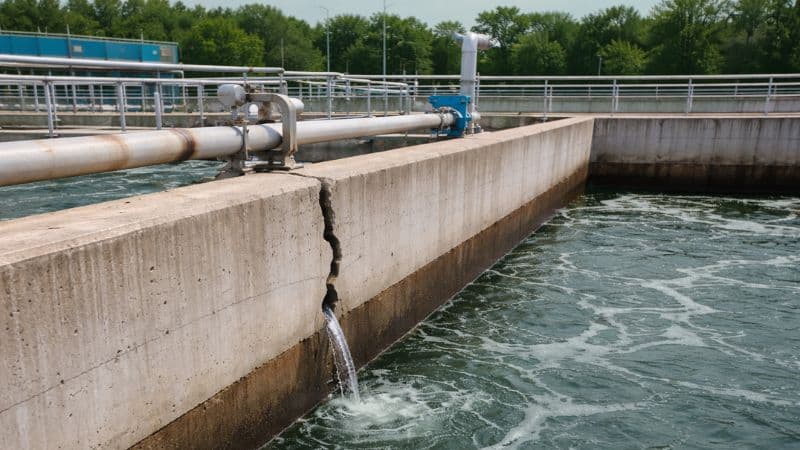
Globally, much of the water treatment infrastructure is old. Plants, pipes, and intakes were built for past climate conditions. Climate pressure accelerates wear, increases failure rates, and exposes design limits.
Flood cycles damage buried assets. Drought causes ground movement and pipe breaks. Heat stresses mechanical and electrical systems. Power outages interrupt treatment during the moments when clean water matters most. Resilience is no longer optional. Water treatment systems must operate through disruption, not pause until conditions improve.
Talent is becoming the limiting factor
Technology alone will not secure the future of water treatment. Talent is emerging as the defining constraint worldwide. The sector depends on operators, engineers, and technicians who can manage complex systems under pressure.
Most people working in water treatment did not plan to enter the industry. They fell into water through trades, local government roles, military service, or adjacent technical jobs. This accidental entry model has sustained the sector for decades. Under climate pressure, it is breaking down.
Modern water treatment demands stronger technical skills, comfort with digital systems, and the ability to manage risk in real time. At the same time, experienced workers are retiring and younger professionals are not entering the sector at scale. Without people, investment in infrastructure and technology falls short.
What the future of water treatment requires
The future of water treatment depends as much on people as on infrastructure and technology. Climate pressure is increasing system complexity faster than the workforce model can support. The industry still relies heavily on chance entry. That approach no longer works.
Water treatment now needs people who actively choose the industry and commit to it long term. Waiting for people to fall into water creates gaps in skills, leadership, and continuity. Under climate pressure, those gaps surface quickly and at high cost. The sector must move from passive hiring to intentional talent development.
This means investing early in young professionals and presenting water treatment as a serious, technical, future facing career. Clear entry routes, structured training, and visible progression matter. Informal knowledge transfer and on the job learning alone cannot support the level of complexity utilities now face.
Robert Tinton, Senior Vice President at LVI Associates, says:
Water is too important to leave to accidental careers. Building resilient systems means developing people who choose this work and are trained for what lies ahead, not for conditions from twenty years ago.
Training must reflect current operational reality. Operators and engineers manage advanced treatment processes, digital monitoring, energy constraints, and climate driven variability. These skills require deliberate development and long term support.
Robert notes:
Technology alone will not fix the problem. Without skilled people to design, run, and adapt systems, progress stalls. The sector has to back young professionals early and make water a long-term career, not a temporary role.
Globally, the regions that adapt best will treat workforce development as core infrastructure. Pipes and plants matter, but talent determines how well water treatment systems perform under climate pressure.
What this means for employers and water professionals
The workforce challenge in water treatment is no longer theoretical. Organizations that delay will compete for a shrinking pool of experienced talent while system complexity continues to rise. Utilities, operators, and water focused companies looking to hire need to act earlier, plan further ahead, and engage partners who understand the realities of the sector. If you are building teams under climate pressure, now is the time to request a call back and have a direct conversation about talent strategy, not just open roles.
For water professionals, the shift creates opportunity. As treatment systems become more advanced and more critical, demand for skilled operators, engineers, and leaders continues to grow. Progression will favor those who invest in their skills and position themselves early. If you are working in water treatment and looking to move forward in your career, take a look at our current water treatment jobs or register your resume to access roles aligned with where the industry is heading.