Battery Engineer Salaries in Germany 2026: Hiring Trends and Demand
May 2026Harry Morgan4 min read
Germany Battery Engineers Salary 2026: Hiring Trends and Demand
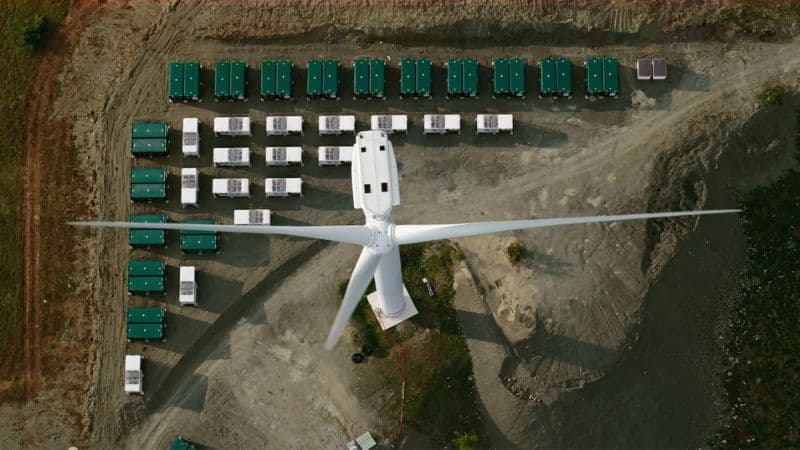
Battery engineer salaries in Germany are closely tied to the growth of battery energy storage systems (BESS), with demand rising as storage becomes central to renewable integration. Market expansion is driven by investment in grid-scale storage, manufacturing, and energy infrastructure. Hiring is concentrated on scaling production and deploying systems that support grid stability as wind and solar capacity increase.
Key market insights
0%
year-on-year growth in Germany’s battery storage capacity.
0%
compound annual growth rate (CAGR) for European BESS deployment over the next decade.
Germany battery engineer salary benchmarks
Battery engineer salaries in Germany reflect a structured market, with clear salary bands across energy storage and battery engineering roles. Demand is strongest at the senior level, driving the most movement in experienced hires.
Battery Engineers – BESS
| Level | Experience | Salary Range |
| Mid-Level | 3–5 years | €75,000 – €95,000 |
| Senior | 5–10 years | €95,000 – €120,000 |
| Principal / Manager | 10+ years | €120,000 – €150,000+ |
Within the energy storage market, salary remains important, but it is rarely the deciding factor. Engineers with experience in large-scale storage projects are prioritising long-term progression and exposure to complex systems over short-term compensation increases.
Where the BESS demand is growing in Germany
BESS hiring is concentrated in regions where manufacturing scale and energy infrastructure investment intersect. Brandenburg, particularly Grünheide, continues to see strong demand due to large-scale battery production and the surrounding ecosystem supporting storage deployment. This has created sustained hiring across production, process engineering, and quality roles.
Lower Saxony, especially Salzgitter, is another key hub where battery cell production is scaling. The focus here is on building long-term manufacturing capability, increasing demand for engineers with experience in automation, process optimization, and industrial scale-up.
North Rhine-Westphalia, particularly Aachen, is developing as a research and pilot production hub. Companies in this region are transitioning battery innovation into industrial-scale output, creating demand for engineers who can operate between development and production environments.
How renewables are driving battery hiring
Battery engineer salaries in Germany are increasingly influenced by the expansion of renewable energy, as storage becomes critical to grid stability. Wind and solar capacity continue to grow, with around 21 GW of new renewable capacity added in 2025 and total capacity rising roughly 11% year on year.
This growth is creating a mismatch between energy generation and demand due to the intermittent nature of wind and solar power. Energy storage systems are being deployed to manage this imbalance, driving demand for engineers across both manufacturing and grid-connected applications.
This trend aligns with wider European growth in battery storage, with deployment expected to grow at around 9% CAGR over the next decade. As renewable penetration increases, so does reliance on storage to balance supply and demand, particularly at the grid scale.
Battery energy storage systems also place additional pressure on grid infrastructure. As renewable capacity expands, investment in storage and grid upgrades is required to maintain system stability, reinforcing the need for engineers who understand both battery systems and wider energy networks.
BESS recruitment challenges and time-to-hire in Germany
Recruitment for battery energy storage systems is becoming more competitive as demand increases across manufacturing and deployment projects. Clients consistently highlight the same issue: access to experienced engineers is limited, particularly at the senior level, where delivery experience is required. Companies are competing for a small pool of qualified candidates, increasing pressure on hiring teams.
BESS time-to-hire benchmarks
8 to 12 weeks
average time-to-hire across BESS roles.
10 to 12+ weeks
typical hiring timeline for senior engineers.
Clients report that while mid-level roles can move quickly when processes are aligned, senior hires regularly extend beyond these timelines. This is often driven by slow internal approvals and multiple stakeholder involvement.
Delays are not only due to candidate availability, but also internal hiring processes. Overly specific requirements, misalignment between hiring managers and HR, and slow decision-making are common challenges. As a result, candidates are progressing through multiple processes and accepting competing offers before decisions are made.
Companies that simplify requirements, align internally earlier, and move faster through interview stages are seeing stronger outcomes in a competitive BESS recruitment market.
What battery engineers want in Germany
Salary is not the primary driver of candidate decisions. Engineers are prioritizing long-term career progression, stability, and exposure to large-scale energy storage projects. Roles that offer involvement in grid-scale systems and infrastructure are consistently more attractive than those focused purely on compensation.
Flexibility is also a key factor, with hybrid working and work-life balance now expected. Companies that position themselves around development and long-term growth are outperforming those relying purely on salary to attract talent.
Battery market shift toward large-scale deployment
Germany’s battery market is moving toward a production and deployment-focused phase. While research remains important, the strongest hiring demand is now in manufacturing, system integration, and operational optimization, reflecting the shift from early-stage development to large-scale rollout of storage projects. This is being driven by rapid growth in deployment across both utility-scale and industrial applications, where storage is now a core part of energy infrastructure rather than a pilot technology.
There is increasing demand for engineers who can take battery technology and apply it to real-world energy storage deployment, particularly within grid-scale projects. Germany’s storage buildout is accelerating, with installed capacity already reaching gigawatt scale and continuing to expand through 2026, reinforcing the need for engineers with hands-on delivery experience.
This shift is increasing the value of candidates with practical, project-based experience and reducing reliance on purely academic profiles. As renewable energy penetration exceeds 60% of electricity generation, the need for operational storage systems that can balance supply and demand is becoming more critical, further driving demand for engineers who can operate at the system level rather than purely in research environments.
Outlook for battery engineer salaries in Germany
Salary growth will remain controlled, but pressure will continue at the senior level where supply is limited. As renewable energy expansion and storage deployment accelerate, demand for experienced engineers will continue to increase.
Companies that delay hiring decisions will face higher competition and rising costs over the next 12 to 24 months.
Hiring battery engineers in Germany or looking for your next role
The German battery hiring market is defined by strong demand and limited access to experienced talent. Competition is highest at senior level, particularly for engineers with experience in production and grid-connected systems.
For organizations looking to strengthen their BESS recruitment strategy in Germany, speed and flexibility are now critical. Companies that move quickly and remain open on profile requirements are securing the strongest candidates, while slower processes are leading to missed hires and project delays.
Request a call back to access current battery engineering talent and market insight.
For professionals, the strongest opportunities are in roles that offer exposure to large-scale energy storage projects, renewable integration, and long-term career progression.
Register with us to access current opportunities aligned with your experience and career goals.