

September 20264 min read
AI-Assisted Design in Data Centers
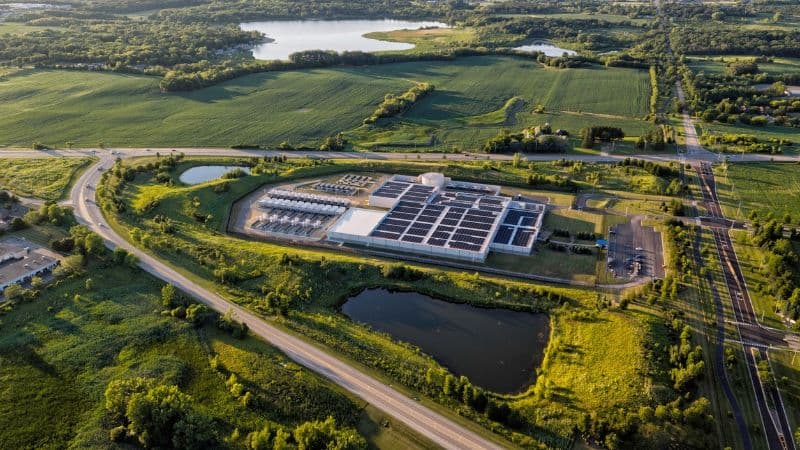
AI-assisted design in data centers is changing how developers, engineering firms, contractors and operators plan increasingly complex facilities. From testing cooling configurations before construction starts to modeling electrical loads and generating alternative layouts, AI is giving design teams new ways to assess decisions earlier and coordinate technical disciplines more effectively.
This shift is happening as the data center sector faces another challenge: finding enough people with the engineering, digital and mission-critical experience to apply these tools effectively. For employers, AI-assisted design is as much a talent issue as a technology one. LVI Associates supports organizations looking for specialist data center talent across engineering, construction, commissioning, operations and project delivery.
What is AI-assisted design?
AI-assisted design uses artificial intelligence alongside BIM, computational design, engineering simulation and digital twins to support technical decision-making. It can help teams process more information, compare design options and identify issues before they reach construction.
In data centers, this can include:
- Generating and comparing building layouts
- Analyzing power distribution
- Modeling cooling and airflow
- Testing equipment configurations
- Identifying spatial and engineering conflicts
- Supporting BIM coordination
- Automating repetitive design tasks
- Simulating operational scenarios
- Creating digital twins for ongoing use
Generative design can also compare many possible configurations against factors such as cost, space, energy demand and technical requirements. This allows engineers to narrow the field before carrying out detailed analysis.
AI does not remove the need for architects or engineers. Its value comes from helping experienced professionals evaluate more information and test ideas earlier.
Why AI-assisted design matters for data centers
AI infrastructure is changing how data centers are designed. Higher-density computing is increasing requirements around electrical capacity, heat management and supporting infrastructure, which means architecture, mechanical systems, electrical systems and cooling need to be considered together.
This creates a strong use case for digital simulation and digital twins. NVIDIA's Omniverse DSX Blueprint, for example, supports digital twins of AI factories and combines thermal, electrical and infrastructure simulation. These environments can help teams test design decisions before physical infrastructure is complete.
For project teams, that means moving away from entirely sequential design processes. Information from different disciplines can feed into shared models, giving architects and engineers a clearer view of how changes in one system affect another.
That makes early design expertise more important. LVI Associates supports developers and consultancies looking for specialist architecture talent, including architects, project architects, BIM professionals and technical specialists.
Where is AI-assisted design already being used?
AI-assisted design and digital twin technology are already being used across engineering, construction, infrastructure and data center operations.
Jacobs has developed a Data Center Digital Twin solution using NVIDIA's Omniverse DSX Blueprint. CoreWeave is using DSX Air to build and test digital twins of AI factories before physical delivery, while Switch is applying digital modeling across its AI infrastructure.
Other infrastructure companies are developing similar capabilities. Schneider Electric is combining digital twins with power and cooling design for AI facilities. Cadence uses physics-based simulation and CFD to model cooling, power and capacity. Vertiv is developing a physical infrastructure digital twin for power, cooling and controls, while Trane Technologies is using digital twin technology to simulate thermal systems for large AI data centers.
These examples show that AI-assisted design is being applied across the full data center lifecycle, rather than sitting within one design discipline.
What are the benefits of AI-assisted design?
Faster design decisions
Large data center projects require input from multiple technical teams, often working across different platforms. AI-assisted and computational tools can help compare options earlier and identify which designs deserve further analysis.
This can reduce time spent developing concepts that fail to meet cost, capacity or engineering requirements. It also gives engineers more time to focus on technical judgment rather than repetitive design work.
Better coordination between disciplines
Data centers combine architecture, electrical systems, mechanical infrastructure, cooling, structural engineering, controls, networking and construction. Changes in one area can quickly affect another.
This is where BIM and VDC talent becomes particularly important. BIM and Virtual Design and Construction professionals can manage digital models, coordinate disciplines, identify clashes and support communication between design and construction teams.
LVI Associates' BIM/VDC practice covers skills such as Revit, Navisworks, Autodesk Construction Cloud, MEP coordination, clash detection, 4D sequencing and digital handover. These capabilities sit closely alongside many AI-assisted design and digital twin workflows.
Testing before construction
Simulation is one of the strongest applications of AI-assisted design. Teams can model airflow, thermal loads, electrical systems, rack configurations and operational scenarios before physical infrastructure is complete.
For large data center developments, identifying problems earlier can reduce the risk of expensive late-stage changes. It also allows teams to compare options before equipment has been ordered or installed.
Designing for high-density computing
AI workloads are increasing demand for higher-density racks, greater power capacity and advanced cooling systems. This puts electrical and mechanical engineering at the center of new data center design.
Electrical engineers need to consider utility connections, substations, switchgear, UPS systems and high-density power distribution. Mechanical engineers are dealing with thermal management, chilled-water systems, liquid cooling and CFD.
LVI Associates supports organizations recruiting mechanical and electrical engineering talent, including electrical design engineers, HVAC engineers, commissioning specialists and MEP professionals.
AI-assisted modeling can help these professionals analyze systems faster, but engineering experience remains central to interpreting the results.
The talent needed for AI-assisted data center design
The biggest hiring challenge is likely to be finding professionals who combine technical data center knowledge with digital capability.
BIM and VDC professionals
BIM and VDC professionals will play a bigger role as information moves between design, construction and digital twin environments. Their work increasingly covers coordination, constructability, sequencing, data management and digital handover.
LVI Associates' BIM/VDC recruitment team supports hiring across roles including BIM Coordinators, BIM Managers, VDC Engineers, VDC Managers and Digital Delivery Managers.
Data center experience can be particularly valuable because these professionals need to understand how electrical, mechanical and architectural systems interact on mission-critical projects.
Architects and technical design professionals
Architects will also need to work more closely with digital design tools. Generative and computational systems can help assess layouts and technical requirements, but architects still need to make decisions around spatial planning, constructability, code compliance and operational needs.
Professionals who combine technical architecture with BIM and digital delivery can help connect early-stage concepts with engineering execution. LVI Associates' architecture recruitment services support hiring across architecture, technical design and mission-critical project roles.
Mechanical and electrical engineers
Mechanical and electrical engineers remain central to data center design, particularly as AI workloads increase power and cooling requirements.
Mechanical engineers with CFD, chilled-water, heat rejection and liquid-cooling experience are likely to remain in demand. Electrical engineers with experience across utility connections, substations, switchgear, UPS systems and power distribution will also continue to play a major role.
The added value will increasingly come from combining these core engineering skills with simulation, BIM and digital modeling.
Digital twin and computational specialists
Digital twin specialists sit at the intersection of engineering, data, software and operations. They may need to understand BIM and CAD environments alongside simulation, data integration and facility systems.
Computational and generative design specialists are also becoming more relevant. Skills in scripting, data modeling and automation can help teams generate and assess design options more efficiently.
However, software knowledge alone has limited value if teams cannot determine which options are technically feasible. Employers are likely to place the greatest value on professionals who can combine digital capability with real engineering or construction experience.
The hiring challenge
AI-assisted design could increase demand for candidates who combine traditionally separate skill sets.
That may include:
- Data center engineering and advanced BIM
- Architecture and computational design
- Mechanical engineering and CFD
- Electrical engineering and digital simulation
- VDC and automation
- Mission-critical engineering and digital twins
- Engineering combined with data or AI skills
These combinations can be difficult to find. A candidate may have strong mission-critical experience but limited exposure to digital twins, while another may understand computational design without having delivered a data center project.
For employers, the answer is not simply to recruit more people. It is to identify which skills already exist internally, which can be developed and where specialist hiring is required.
Are your data center salaries aligned with the market?
Competition for specialist data center talent is already putting pressure on compensation. As employers compete for people who understand design, construction, power, cooling and digital engineering, salary expectations can move quickly.
The LVI Associates Global Data Centers Compensation Guide 2026 provides salary benchmarks across the USA, Europe and APAC. It covers engineering, construction, project delivery, VDC/BIM and other specialist functions.
The guide includes an upper base salary benchmark of $300,000 for senior construction leadership positions in the USA, S$400,000 for VPs of Construction in Singapore, and €220,000+ for Project Directors in Germany.
As digital and engineering skill sets overlap, historical salary assumptions may not reflect what specialist professionals expect from their next move. Employers hiring people with experience across engineering, BIM, VDC, simulation or AI may also find themselves competing with a wider group of companies.
Hiring for the next generation of data center design
AI-assisted design is changing the skills data center teams need. As BIM/VDC, architecture, electrical engineering, mechanical engineering and digital design become more closely connected, employers need people who can work across disciplines while still bringing deep mission-critical expertise.
That combination is difficult to find. The strongest candidates are often those who understand the physical demands of data center delivery and can also work with digital modeling, simulation, automation and emerging design tools.
LVI Associates helps data center developers, architecture and engineering firms, general contractors and infrastructure providers identify specialist talent across design, engineering, construction and project delivery. Our consultants can help you assess the skills you need, understand where that talent sits in the market and build a hiring strategy around upcoming projects.
Request a call back from LVI Associates to discuss the BIM/VDC, architecture, electrical and engineering talent you need to support your next data center project.