

Exterior Restoration Talent: Why Pay Rises with Risk and Specialist Knowledge
June 2026Salem Ali6 min read
Exterior Restoration Talent: Why Pay Rises with Risk and Specialist Knowledge
Exterior restoration sits within construction, but it should not be treated as one broad construction trade. In the USA, it operates as a specialist labor market spanning facade restoration, masonry, roofing, waterproofing, concrete repair, building envelope consulting, and Local Law 11 work.
A general construction background can help someone enter the market, but it does not automatically prepare them for exterior restoration. The sector rewards people who understand how buildings fail, how water moves, how facades perform, and how to manage high-risk repair work on occupied buildings.
That is why salaries vary so widely. The market does not pay for the label alone. It pays for specialist skill, technical judgment, and the ability to reduce risk.
Exterior restoration is part of construction, but it behaves differently
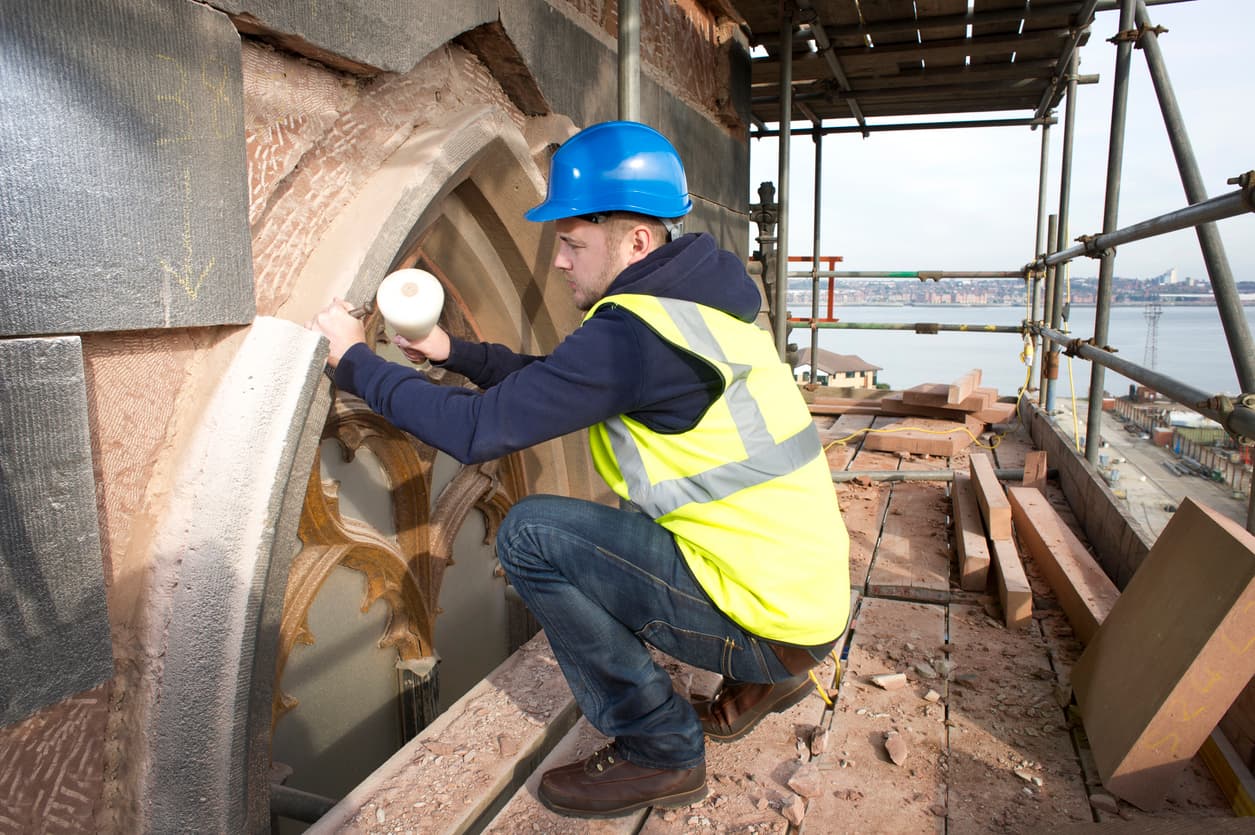
Exterior restoration falls under the construction industry, most often within specialist construction recruitment, building envelope, repair and maintenance, and restoration services.
It overlaps with commercial construction, engineering, consulting, facilities management, and historic preservation. But it has its own talent dynamics.
A contractor may need masons, estimators, facade consultants, project managers, waterproofing specialists, rope access technicians, drafters, engineers, and site supervisors on the same project. Each role needs a different skill set and a different salary expectation.
That is where many employers go wrong. They treat exterior restoration as a general construction hire, then struggle to attract the right professionals.
The skills gap is driving salary pressure
The USA exterior restoration market depends on skills that take years to build.
Masonry restoration requires knowledge of brick, stone, mortar, anchoring, weathering, and substrate conditions. Waterproofing specialists need to understand water intrusion, membranes, sealants, drainage, and system failure. Facade consultants need technical knowledge of building envelope performance, codes, inspections, access methods, and repair design.
Local Law 11 and FISP work in New York adds another layer. Under the NYC Department of Buildings’ Façade Inspection & Safety Program, owners of buildings higher than six stories must have exterior walls and appurtenances inspected every five years and submit a technical facade report. Professionals with this experience understand inspection cycles, facade safety requirements, reporting, hands-on assessments, and the commercial expectations of building owners and property managers.
Local Law 11 experience is one of the clearest examples of how specialist knowledge changes a candidate’s market value. Employers are not just looking for construction experience, they need people who understand facade compliance, inspection cycles, client expectations, and the risks attached to occupied-building work. That combination is difficult to find, which is why strong candidates in this space can command competitive salaries.
These are not generic construction skills. They are specialist capabilities, and that is why strong candidates can command higher salaries.
LVI Associates salary benchmarks
LVI Associates salary data reflects what we typically see across the US exterior restoration and building envelope market. Salary bands rise when roles require facade knowledge, Local Law 11 or FISP experience, estimating capability, technical oversight, and client-facing responsibility.
The table below show our recent salary benchmarks from US exterior restoration and building envelope searches. These ranges should be read as market indicators rather than fixed salary guarantees, as active vacancies, compensation packages, and hiring requirements can change.
| Role | Location | Salary benchmark | What the salary reflects |
| Facade Restoration / Local Law 11 Estimator | Manhattan, NY | $75,000 to $150,000 | Estimating, facade restoration knowledge, Local Law 11 exposure, and commercial pricing responsibility |
| Facade Restoration FISP Consultant | New York City, NY | $90,000 to $140,000 | FISP and Local Law 11 project work, facade inspections, technical consulting, and hands-on assessment experience |
| Estimator, Facade Restoration & Waterproofing | Manhattan, NY | $80,000 to $160,000 | Waterproofing, facade repair, takeoffs, bid preparation, and specialist restoration pricing |
| Project Manager, Exterior Restoration / Local Law 11 | Manhattan, NY | $100,000 to $170,000 | Project delivery, client management, facade and building envelope restoration, and risk control |
| Building Envelope Consultant, Restoration | New York, NY | $120,000 to $180,000 | Building diagnostics, restoration consulting, facade systems, roofing, waterproofing, and technical project leadership |
| Senior Building Envelope Consultant | New York, NY | $110,000 to $150,000 | Senior consulting responsibility, FISP or building envelope expertise, parking garage restoration, and client-facing leadership |
These benchmarks show a clear pattern. Exterior restoration salaries increase when the role moves closer to technical decision-making, compliance exposure, client management, and commercial ownership.
A professional supporting takeoffs or assisting with site reviews may sit toward the lower end of the market, while someone who can lead facade investigations, price complex restoration work, manage Local Law 11 projects, or advise clients on building envelope failures, will sit much higher.
Why general construction benchmarks are too broad
Benchmarking exterior restoration salaries against general construction roles can create problems.
According to the U.S. Bureau of Labor Statistics, construction and extraction occupations had an annual mean wage of $65,360 in May 2025. That is useful context, but it does not capture the premium attached to specialist facade, waterproofing, Local Law 11, and building envelope experience.
A general project manager might understand schedules, budgets, subcontractors, and site coordination, but exterior restoration often requires another layer of judgment. The work can involve hidden damage, facade access, water intrusion, active buildings, structural concerns, historic materials, and city-specific compliance requirements.
That added complexity changes the salary conversation. A candidate who understands facade restoration, waterproofing, masonry repair, Local Law 11, and building envelope diagnostics brings more value than someone with broad construction experience alone.
The highest-paid exterior restoration experts reduce risk
The strongest salaries in exterior restoration usually attach to roles that reduce risk for employers and clients.
Estimators reduce commercial risk by pricing jobs correctly. Project managers reduce delivery risk by controlling scope, labor, schedule, and client expectations. Building envelope consultants reduce technical risk by identifying failure points and recommending the right repair approach. Senior facade specialists reduce compliance and safety risk, especially on high-rise or regulated work.
This is the real reason salaries rise. Employers need people who can make decisions that protect the business.
Cheap hiring can become expensive fast in exterior restoration. A weak estimate can damage margin. Poor technical judgment can create rework. Bad sequencing can delay a project. Missed defects can lead to warranty claims. Weak site leadership can create safety exposure.
Candidates can increase earnings through specialization
For candidates, exterior restoration offers strong salary potential, but progression depends on specialization.
A general construction professional can enter the market, but earnings increase when they build skills in facade restoration, waterproofing, masonry repair, Local Law 11, building envelope consulting, estimating, or project leadership.
The strongest candidates often combine field knowledge with commercial judgment. They understand the work on site, but they also understand cost, scope, client expectations, and project risk.
A candidate who can inspect a facade, understand the repair scope, speak with engineers, price the work, manage subcontractors, and communicate with ownership will have more leverage than someone with only one narrow skill set.
Employers need to pay for the skill, not the job title
Employers should be careful with broad job titles such as restoration technician, estimator, consultant, or project manager. In exterior restoration, the title alone does not tell the full story.
The real question is what the person can do. Can they work on Local Law 11 projects? Can they price facade restoration accurately? Can they understand waterproofing failures? Can they manage occupied-building work? Can they lead client conversations? Can they protect margin? Those are the capabilities that shape salary.
Companies that underpay for specialist exterior restoration talent will struggle to hire and retain. Strong professionals know the market. They also know they have options across contractors, engineering firms, consultants, ownership groups, and self-employment.
For organizations hiring in this space, LVI Associates’ facade and building envelope recruitment team can support searches for specialist talent across design, engineering, consulting, and restoration.
What this means for candidates and hiring teams
Exterior restoration is part of construction, but it has its own salary dynamics.
LVI Associates salary benchmarks reflect what we typically see across the USA market: pay rises when candidates bring specialist facade, building envelope, waterproofing, estimating, Local Law 11, FISP, and project leadership experience.
If you’re a professional or a candidate, this is a strong time to assess your next move. If you have experience in facade restoration, waterproofing, building envelope consulting, Local Law 11, estimating, project management, or specialist restoration work, the market is paying for that knowledge.
Candidates looking to move roles or upskill can view current construction opportunities with LVI Associates, or search wider engineering and infrastructure roles to be considered for relevant future opportunities.
For organizations, the message is clear. Hiring in exterior restoration should not rely on general construction salary benchmarks alone. The best professionals bring technical knowledge, commercial judgment, and risk control. Companies that want to attract and retain this talent need compensation and hiring strategies that reflect the real value of those skills.
Organizations looking to hire exterior restoration, facade, waterproofing, building envelope, or Local Law 11 talent can request a call back from LVI Associates to discuss current market conditions, salary expectations, and hiring support.