

March 20264 min read
What Companies Get Wrong When Hiring Hydrogeologists
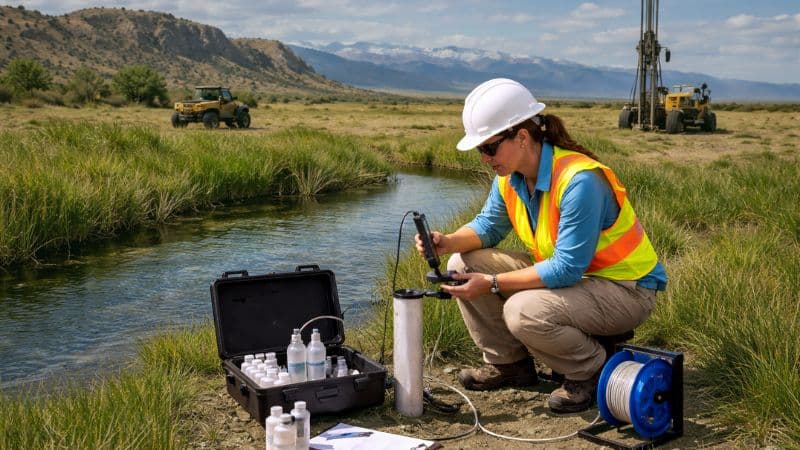
What companies get wrong when hiring hydrogeologists becomes clear when roles stay open too long, projects slow, and teams take on more than they should. Across the US, demand for groundwater expertise is rising in infrastructure, water, environmental consulting, and energy, but hiring approaches have not kept pace. The gap is not about need, it is about how companies position roles and compete for a limited talent pool.
Why hydrogeologist roles are often defined incorrectly
The first issue sits in how the role is scoped. Hydrogeology is a specialist discipline that combines groundwater modeling, site investigation, and regulatory compliance under EPA and state frameworks. Many companies still group it under general environmental hiring, assuming adjacent experience will translate. In practice, that assumption leads to poor alignment because the technical depth required is much narrower than expected.
The scope often expands as hiring discussions progress. A straightforward requirement turns into a list that includes modeling, remediation, permitting, project delivery, and client development. Each element is valid, but together they describe a small portion of the market. A typical example is a mid-level role that quietly includes senior-level expectations, which leads to slow searches or hires that do not meet the role requirements.
The real issue with assessing experience
Experience is frequently misread. Many candidates look similar on paper, with comparable degrees and project exposure, but their level of responsibility differs. Some have supported investigations or remediation work, while others have led projects, worked directly with regulators, and made technical decisions.
From a recruitment perspective, this is one of the most common gaps between what a resume suggests and what a candidate can actually deliver. The distinction between supporting work and owning outcomes is critical, particularly in roles that require independent judgment and client interaction. Without testing for that, companies often overestimate capability and make hires that struggle to step up.
The talent shortage most companies underestimate
The US market for hydrogeologists is tight, and expectations often miss that reality. Employment for geoscientists is projected to grow at around 3-5% this decade, driven by environmental regulation, water management, and infrastructure investment. At the same time, the number of qualified professionals entering the field is limited, especially at mid-level.
This creates a structural gap. There is entry-level talent and there are senior specialists, but the middle of the market is thin. That is exactly where most hiring demand sits, which makes searches harder than expected.
From a recruitment standpoint, the strongest candidates are rarely active. They are already employed and open only to the right opportunity. Reaching them requires direct engagement and a clear value proposition, not just a job posting.
Why job descriptions push strong candidates away
Job descriptions often reflect internal wish lists rather than market reality. Instead of defining what is needed now, they combine multiple skill sets into one role. This narrows the pool and sends the wrong signal to candidates.
A common example is a mid-level role that asks for modeling expertise, remediation design, regulatory knowledge, and project management. Candidates who meet part of that requirement often step back because they assume they are not a fit. At the same time, less relevant profiles move forward, which slows the process.
From a recruitment perspective, clearer and more focused job descriptions consistently lead to better engagement and higher-quality shortlists.
Why hiring processes break down
Even when the right profiles are identified, process issues often get in the way. Delayed feedback, unclear decision-making, and slow approvals all reduce the chance of securing strong candidates. In a competitive market, timing matters.
This is a consistent pattern seen across searches. Candidates who are engaged and interested will quickly lose momentum if the process slows down. In most cases, they are running multiple opportunities at once, and the company that moves first with clarity and intent is the one that secures the hire.
Salary expectations vs market reality in the US
Compensation is another area where companies fall behind the market. In the US, mid-level and experienced hydrogeologists typically command salaries ranging from around $100,000 to well over $150,000, with higher levels in consulting, infrastructure, and specialist remediation roles. Candidates with strong modeling expertise or regulatory experience often sit at the top end of that range or above it, particularly where project complexity is high.
Location plays a major role in how these salaries are structured. Markets such as California, Texas, and the Northeast tend to command higher compensation due to project volume, regulatory complexity, and cost of living. In contrast, smaller or less active markets may offer lower base salaries, but this is often offset by a more limited talent pool, which can still drive competition for experienced professionals.
The challenge is how quickly expectations shift. Internal salary bands often lag behind the market, which leads to offers that are no longer competitive. This is most visible at mid-level, where demand is highest and candidates are most mobile.
When this happens, hiring timelines extend and pressure builds on existing teams, particularly in project-driven environments.
How to fix these hiring issues
Most hiring challenges in this space come back to alignment. Companies that succeed define roles based on immediate need, not long-term ideal profiles. They focus on core capabilities and avoid overloading the scope.
They also align compensation with current market conditions and act quickly when the right candidate appears. In a tight market, delay is the main reason strong candidates are lost.
From a recruitment standpoint, the most effective hiring strategies are simple, focused, and aligned with how the market actually behaves.
Why companies partner with LVI Associates for hydrogeology hiring
LVI Associates supports hydrogeology hiring across the US by focusing on specialist environmental and infrastructure markets. The approach centers on engaging passive candidates who are not visible through traditional methods, particularly at mid to senior level.
Roles are refined before going to market, based on real conditions such as talent availability, salary expectations, and competitor activity. This reduces friction early and leads to stronger, more relevant shortlists.
A focus on niche technical markets also allows for a clearer view of candidate quality. Small differences in experience can have a significant impact on performance, and identifying those differences is key to making the right hire.
If you are hiring hydrogeologists or struggling to fill a key role, you can request a call back with a specialist consultant to discuss your hiring needs and get a clear view of the current market.
Hydrogeologist FAQs
A hydrogeologist is a scientist who studies groundwater, which is water stored beneath the Earth’s surface in soil, sand, and rock formations. A hydrogeologist focuses on how groundwater moves through these materials, how much is available, and how natural processes and human activity affect its quality.
Groundwater is a major source of drinking water in the United States, so hydrogeologists play a direct role in protecting public health and supporting infrastructure.
A hydrogeologist works on understanding and managing underground water systems. The role is tied to real projects rather than theory.
A hydrogeologist may assess water supply for cities, investigate contamination from industrial or agricultural sites, or support construction and engineering projects. They are often involved early in projects to identify risks related to groundwater and help plan safe solutions.
A hydrogeologist splits time between fieldwork and office work.
In the field, they visit sites to monitor wells, collect groundwater samples, and measure water levels. This work can involve travel and working outdoors for long periods.
In the office, they analyze the data collected from the field. They use software to model how groundwater moves and how it may change over time. They also write technical reports and communicate findings to clients, regulators, and project teams.
The role requires both practical field skills and strong analytical ability.
Hydrogeologists deal with issues that directly affect water safety and availability.
They investigate groundwater contamination caused by chemicals from industrial sites, landfills, or fuel storage. They assess if water is safe for human use and help design cleanup strategies when contamination is found.
They also work on water resource planning, helping identify reliable groundwater sources and manage them over time. In construction projects, they assess how groundwater will impact building stability, flooding risk, and long-term performance.
A hydrogeologist in the US can work in several sectors.
Many work for environmental consulting firms, where they support private sector projects. Others work for government agencies such as the US Geological Survey or environmental protection departments.
Some work within engineering firms on infrastructure and construction projects. There are also roles in mining, energy, and water utilities.
The type of employer affects the type of projects and day-to-day work.
Hydrogeology is a stable career because it is tied to water supply and environmental regulation, both of which are long-term priorities in the US.
The work has a clear real-world impact, especially in areas like drinking water safety and environmental protection. It suits people who prefer applied science and want to work on practical problems rather than purely academic research.