

April 20264 min read
Tennessee Geotechnical Trends: Where Demand Is Growing and Why

The Tennessee geotechnical trends sectors show a clear shift in how projects are delivered and where responsibility sits. Demand is increasing across infrastructure, energy, industrial development, and urban growth. The key change is accountability. Geotechnical input is now expected early, with PE responsibility tied directly to cost, risk, and delivery.
Market overview
Tennessee is moving into a sustained demand cycle driven by transportation investment, grid expansion, industrial development, and population growth. At the same time, regulatory oversight and financing pressure are raising engineering standards. This is pushing geotechnical engineers into roles that directly influence project viability.
This is supported by continued investment. The Tennessee Department of Transportation is maintaining long-term infrastructure programmes, while the Tennessee Valley Authority is expanding generation capacity to meet rising demand. At a broader level, Tennessee ranks among the highest electricity-consuming states in the U.S., reflecting sustained pressure from industry and population growth.
What we are seeing at LVI Associates
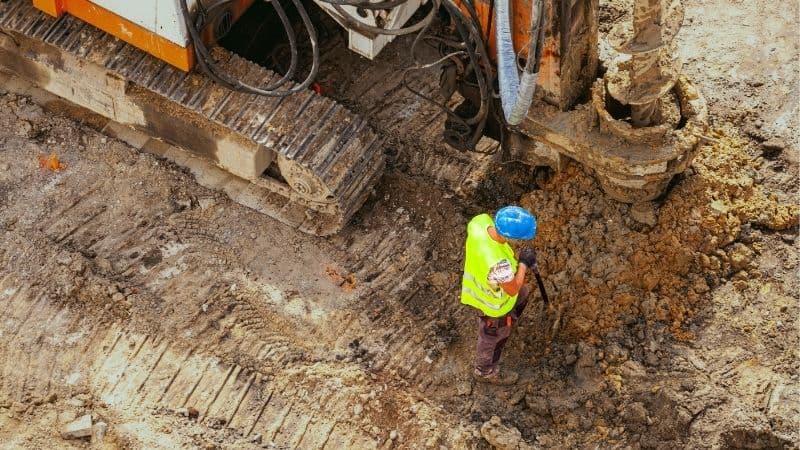
From a market perspective, these trends are already reflected in hiring behaviour.
Demand for geotechnical engineers across Tennessee and the wider Southeast remains strong, particularly in infrastructure-led markets. The constraint is talent. Mid to senior-level engineers, especially those with a PE licence, are increasingly difficult to secure, and hiring timelines are extending.
Client expectations have also shifted. Firms are prioritising engineers who can contribute early in design-build environments, assess risk, and influence cost and delivery decisions. Technical delivery alone is no longer enough.
We are also seeing firms expand beyond traditional focus areas. Transportation teams are hiring into energy, utilities, and industrial projects, reflecting broader changes across the market. Compensation is adjusting accordingly, with stronger offers for engineers experienced in foundations, slope stability, and large-scale site development.
Transportation infrastructure, the most stable sector
Transportation remains the most reliable segment of the market. Public investment in highways and bridges continues to support consistent demand.
This is visible in major projects across the state. In Memphis, the I-40 Hernando de Soto Bridge rehabilitation highlighted structural and foundation challenges tied to aging infrastructure and heavy freight traffic. In Chattanooga, the I-75/I-24 interchange upgrade is one of the largest transport projects in the state, requiring extensive earthworks, foundation design, and slope stabilisation.
The Federal Highway Administration continues to support state delivery through long-term funding and oversight.
These projects create steady demand for expertise in slope stability, bridge foundations, and seismic retrofit work. The shift toward design-build procurement is also changing how engineers operate. Geotechnical input is now required earlier to reduce uncertainty and shape construction strategy.
This sector remains the most predictable area of the market.
Energy and utilities, high growth with higher risk
Energy is one of the fastest-growing areas in Tennessee. Demand is increasing due to electrification, data centre expansion, and population growth.
TVA is expanding its generation portfolio across nuclear, gas, hydro, and solar. A clear example is the Paradise Combined Cycle Plant, where coal-fired units were replaced with a large-scale natural gas facility. Projects like this involve major site redevelopment, heavy foundation systems, and long-term performance considerations under high loads.
Tennessee generates roughly 70–80 terawatt-hours of electricity annually, placing sustained pressure on infrastructure performance (EIA Tennessee electricity profile).
As a result, geotechnical engineers are becoming more directly tied to grid reliability and project risk. The role is shifting from advisory support to accountable decision-making.
Industrial, logistics and data centers, highest reward and pressure
Industrial and data centre development is the most commercially aggressive segment in the Tennessee geotechnical trends sector. Tennessee’s central location continues to drive logistics and manufacturing growth, supported by strong infrastructure and energy availability.
A key driver within this is data centre expansion. Tennessee already hosts over 30 operational data centers, with continued growth concentrated around Nashville and Memphis, reflecting increasing demand for digital infrastructure and power-intensive facilities.
This is translating into large, complex projects with tight timelines and high capital exposure. Data centers in particular require highly controlled ground performance due to settlement sensitivity and the need for long-term structural stability under constant loads.
From what we are seeing in the market, this is also where hiring is most selective. Clients want engineers who can operate beyond technical delivery and contribute to real-time construction and risk decisions.
Commercial and residential, selective but technical
Commercial and residential development plays a more targeted role in Tennessee. Population growth and urban expansion continue to support development, but increasingly on constrained or more complex sites.
This creates demand in situations where technical risk is higher, rather than across all projects. Engineers working in this space tend to focus on specialised input, advisory roles, and higher-liability work.
Final perspective
The direction of the market is now closely tied to hiring pressure. Demand across infrastructure, energy, and industrial projects is outpacing the supply of experienced geotechnical engineers, particularly those with a PE licence.
Firms are competing more aggressively for talent, and expectations are shifting toward engineers who can take ownership early and influence project outcomes. This reflects a longer-term imbalance between project demand and available expertise.
Broader salary benchmarks tend to be lower in states where demand is less concentrated and project pipelines are smaller. However, what we are seeing in Tennessee is consistently above these levels. Mid-level engineers are more commonly landing between $110,000 and $135,000, while senior professionals are reaching $140,000 to $160,000+ depending on project exposure and leadership responsibility. This reflects the strength of demand across infrastructure, energy, and industrial sectors in the region.
If you are a PE geotechnical engineer, register your CV to access current opportunities across Tennessee and the Southeast.