

April 2026Alex Hayes4 min read
Maine Data Center Freeze – Talent Migration
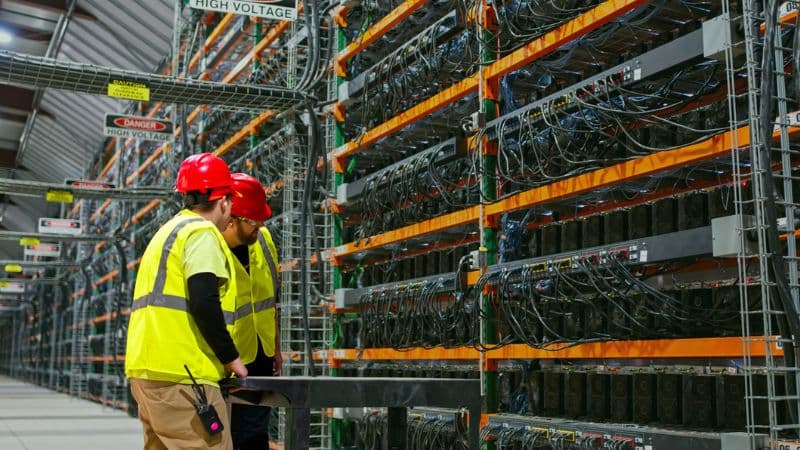
The Maine data center freeze marks a shift in how US states approach large-scale infrastructure, and it will have a direct impact on talent migration across energy, data centers, and the broader built environment.
Maine’s decision to pause new data centers over 20MW until late 2027 is not happening in isolation. It reflects growing pressure on power grids, rising energy costs, and concerns about how AI-driven infrastructure demand is scaling. According to recent coverage from the Washington Post, this is the first statewide moratorium of its kind in the US. For talent markets, this signals that regulation is starting to shape where projects, and therefore people, will go next.
At LVI Associates, we see this as an early indicator of how infrastructure policy will directly influence both project pipelines and talent movement.
Why the Maine data center freeze is happening
The Maine data center freeze is primarily driven by energy and infrastructure constraints, not a rejection of technology.
Large-scale data centers consume significant amounts of electricity. A single 20MW facility can use as much power as thousands of homes. As AI and cloud demand increase, energy consumption is rising faster than many local grids can comfortably support. Analysis from Business Insider highlights how lawmakers are responding to this surge in demand.
In Maine’s case, three factors are driving the pause:
- Grid capacity constraints
Rapid data center expansion risks overloading existing infrastructure, creating reliability concerns and forcing expensive upgrades to transmission and distribution networks. - Rising energy costs
Large industrial energy users can increase overall demand, which may push electricity prices higher for residents and smaller businesses if supply is limited. - Environmental pressure
Data centers require high energy input and water for cooling. With stricter sustainability targets, there is growing scrutiny around their long-term environmental impact.
The freeze gives Maine time to assess these pressures before allowing further expansion. However, while the intent is control, the immediate effect is a slowdown in development.
Why the Maine data center freeze matters for infrastructure talent
The Maine data center freeze disrupts the normal link between infrastructure development and talent demand.
Data centers drive hiring across power, engineering, and construction. When projects move forward, they create sustained demand for electrical engineers, grid specialists, project managers, and commissioning teams. When those projects are paused, local demand slows.
That demand does not disappear. It shifts to regions where development can continue at pace.
What we expect to happen next
From a talent and project perspective, it will trigger three outcomes.
Project pipelines will redirect rather than stall. Developers and hyperscalers will prioritize regions with available power capacity and clearer permitting processes. Investment will likely accelerate in established markets like Virginia and Texas, along with emerging secondary hubs that can support large-scale energy demand.
This shift is already visible at the developer level.
As Alex Hayes, Executive Director at LVI Associates, highlights:
The data centre freeze in Maine doesn’t stop demand, it reshapes who can respond to it. Organizations like QTS anticipated this moment by investing heavily in community outreach and local labour years ago, giving them an operational advantage today. This is also why we’re seeing a gradual pivot away from hyperscale developments and a rapid expansion of modular fabrication. European markets faced these constraints earlier, and the same structural shift is now beginning to take hold in the US.
Talent migration will follow that capital. Infrastructure professionals tend to move with major builds, particularly in data centers where experience is highly specialized. Engineers and project teams who might have been deployed in Maine will instead be absorbed into more active regions, tightening already competitive talent markets.
At the same time, pressure on energy and grid talent will increase. As more projects concentrate in fewer locations, demand for power and utilities expertise will rise. This includes grid connection specialists, renewable integration experts, and energy strategy roles, all of which are already in short supply.
The wider impact on talent strategy
The Maine data center freeze highlights a structural shift. Infrastructure policy is now directly linked to hiring strategy.
Location decisions are no longer based solely on land and cost. Companies are placing greater weight on energy availability, regulatory clarity, and speed of delivery. As a result, talent strategies are being built around regions where projects can realistically move forward.
We are seeing clients reassess hiring plans in line with infrastructure feasibility. Markets that can support rapid development are attracting both investment and skilled professionals. Regions introducing restrictions risk being deprioritized, even if those restrictions are temporary.
What this means for candidates
For infrastructure and energy professionals, the freeze reinforces the importance of aligning with growth markets.
Opportunities will continue to expand, but they will be concentrated in regions with strong energy capacity and active project pipelines. Candidates who are flexible on location, or who have expertise in power systems and grid infrastructure, will be in a stronger position.
There is also a shift toward roles focused on energy strategy, grid resilience, and sustainability. As states respond to increasing data center demand, these skill sets will become more valuable.
A signal for the wider US market
The freeze is unlikely to remain an isolated case. As noted in broader coverage, other states are already reviewing how they manage energy-intensive developments.
This will create a more fragmented market. Some regions will enable growth and attract talent, while others will slow development to manage resource constraints.
From our perspective at LVI Associates, this divergence will define the next phase of infrastructure talent migration.
Talent will follow infrastructure and policy
The Maine data center freeze is not a stop to growth, but it is a redistribution point.
Energy constraints, cost pressures, and environmental considerations are forcing states to rethink how quickly they expand data center capacity. In response, projects will move to regions that can support them, and talent will follow.
For organizations, this creates both risk and opportunity. As talent shifts out of restricted markets like Maine into neighboring states, there will be a surge of highly skilled professionals entering already competitive regions. Navigating that influx, while securing the right people ahead of competitors, will require a more strategic approach to hiring.
If you are looking to hire and position your business to take advantage of shifting talent flows, request a call back with LVI Associates to discuss how to access and secure top infrastructure and energy talent as the market evolves.


FAQs
Data centers operate within a complex legal framework that spans federal, state, and local levels. This includes zoning and land use laws, environmental regulations, energy compliance, and building permits. Depending on the type of data handled, operators may also need to comply with data privacy and security laws.
As demand for AI infrastructure increases, states are starting to introduce more targeted policies. The Maine data center freeze is an example of how regulation is evolving to address energy and infrastructure pressures.
States are introducing restrictions because infrastructure demand is growing faster than existing systems can support. Large-scale data centers require significant electricity and water, which can strain local grids and resources.
There is also increasing concern about rising energy costs for residents and the environmental impact of large facilities. Policies like the Maine data center freeze are designed to give regulators time to assess these risks before approving further development.
Zoning laws play a central role in determining where data centers can be built. Local governments control land use and may restrict large-scale industrial developments to specific areas.
In practice, this can limit the size, location, and timing of projects. Delays in zoning approvals are one of the most common legal challenges developers face, particularly in regions where infrastructure demand is growing quickly.
Environmental regulation is becoming a key factor in data center development. Facilities must meet requirements related to energy consumption, emissions, water usage, and overall environmental impact.
As sustainability targets tighten, states are placing more scrutiny on how data centers operate. This is one of the reasons behind measures like the Maine data center freeze, where environmental impact is being reviewed before further expansion is allowed.
Data centers themselves do not always control the data they store, but they still play a role in maintaining compliance. Operators may need to meet security and infrastructure standards that support broader data protection laws.
Requirements vary depending on the industry, with stricter regulations applying to sectors such as finance and healthcare. This adds another layer of legal consideration for companies building or operating facilities.
Energy regulation is one of the biggest legal constraints on new data center development. Projects must secure access to reliable power and gain approval for grid connections, which can be a lengthy process.
In regions where energy capacity is limited, this can delay or prevent projects from moving forward. The Maine data center freeze reflects how energy availability is now directly influencing policy decisions.
Yes, legal and regulatory challenges are a common cause of delays. Projects can be slowed by permitting processes, environmental reviews, or local opposition.
In some cases, developers choose to relocate projects entirely if approval timelines become too uncertain. This is one of the key drivers behind shifting investment patterns across different states.
The legal landscape for data centers is becoming more complex as demand increases. There is greater focus on energy usage, environmental impact, and long-term infrastructure planning.
States are taking a more active role in regulating development, which is leading to a more fragmented market. The Maine data center freeze is an early example of this trend and may influence how other states approach large-scale data center growth.