

Building Data Centers in Space and What It Reveals About Pressure on Earth
February 20263 mins read
Building Data Centers in Space and What It Reveals About Pressure on Earth
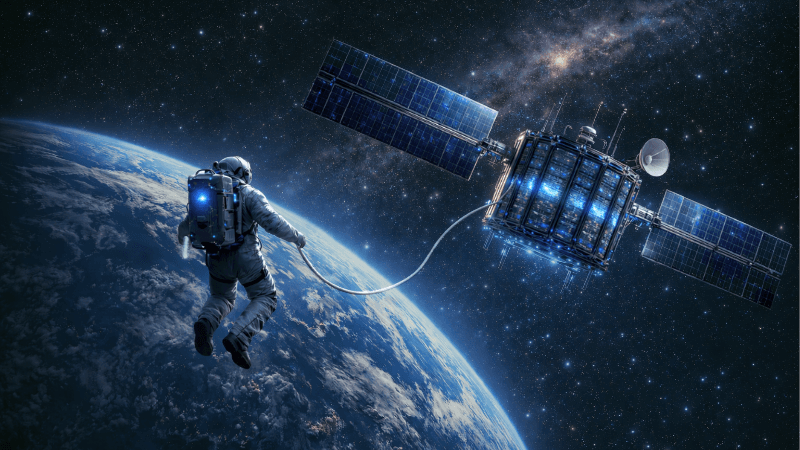
Putting data centers in space is being talked about because building them on Earth is getting stuck. In many established markets, developers cannot get enough power, grid connections take too long, planning approvals face opposition, and water use is under scrutiny. These limits are slowing down new capacity.
The space idea tries to avoid those problems. The thinking is that data centers in orbit could use solar power and would not need land, planning permission, or local grids. But this only works in theory. In reality, building and running data centers in space is extremely hard, very expensive, and full of technical and regulatory problems that are not solved yet.
Who is driving the conversation?
A small number of high-profile figures have pushed the idea of building data centers in space into the mainstream. Elon Musk has repeatedly linked computing capacity in orbit, meaning the servers and processing power that run AI and networks, to the rapid growth of AI and satellite systems. He argues that demand for this processing power is growing faster than Earth-based infrastructure can support. His comments often present space as a way to combine large-scale solar power with data center infrastructure, especially as AI systems require more energy and processing power.
Jeff Bezos has taken a more measured position, but one that still carries weight. He has publicly predicted that data centers could be built in space within the next 10 to 20 years, pointing to the advantage of near-continuous solar energy and the long-term logic of moving energy-intensive infrastructure away from Earth. Bezos has been explicit that this is not a near-term solution. His comments position space- based data centers as a future industrial option, dependent on major advances in launch economics, power systems, and operations.
Beyond individual voices, large organizations are quietly testing elements of the concept. Google has confirmed research into space based processing, particularly focused on handling AI and satellite data closer to its source. The goal is not to run general cloud services. It is to cut the amount of data that needs to be sent back to Earth and to reduce delays for specific tasks. These projects are still at the research stage and are not close to real-world deployment.
China has gone further in practice, launching early orbital systems designed to process data in space rather than transmitting all raw data back to Earth. These systems are limited in scope but signal a strategic interest in autonomous, space-based computing for observation, communications, and national infrastructure.
What unites all of these efforts is scale, or the lack of it. None represent hyperscale infrastructure or a viable alternative to terrestrial data centers today. They are experiments, feasibility tests, and long-term positioning exercises. Their significance lies less in what they deliver now and more in what they reveal about pressure building across Earth-based infrastructure.
Why space looks attractive from the ground
Interest in building data centers in space is rooted in real problems on Earth. In many regions, grid connection timelines now stretch into years, making power availability the primary constraint on growth.
Planning and permitting add further friction, particularly in mature European markets. Lengthy approval processes, environmental scrutiny, and inconsistent planning decisions can delay projects even where sites and power are theoretically available. This uncertainty slows delivery and widens the gap between demand and new capacity.
Alongside these constraints sits a growing talent shortage. Experienced electrical engineers, commissioning leads, controls specialists, and operations professionals are increasingly hard to secure. This affects every stage of delivery, from early design through long-term operations.
At LVI Associates, we see projects stall not due to technology or capital, but because the right expertise is not available at the right time. Aligning talent to each phase of the lifecycle is now one of the defining challenges of data center delivery.
From a distance, space appears to remove many of these barriers. No land competition. No planning process. Solar power without a grid connection. That appeal fades quickly once engineering reality takes over.
The reality of operating in orbit
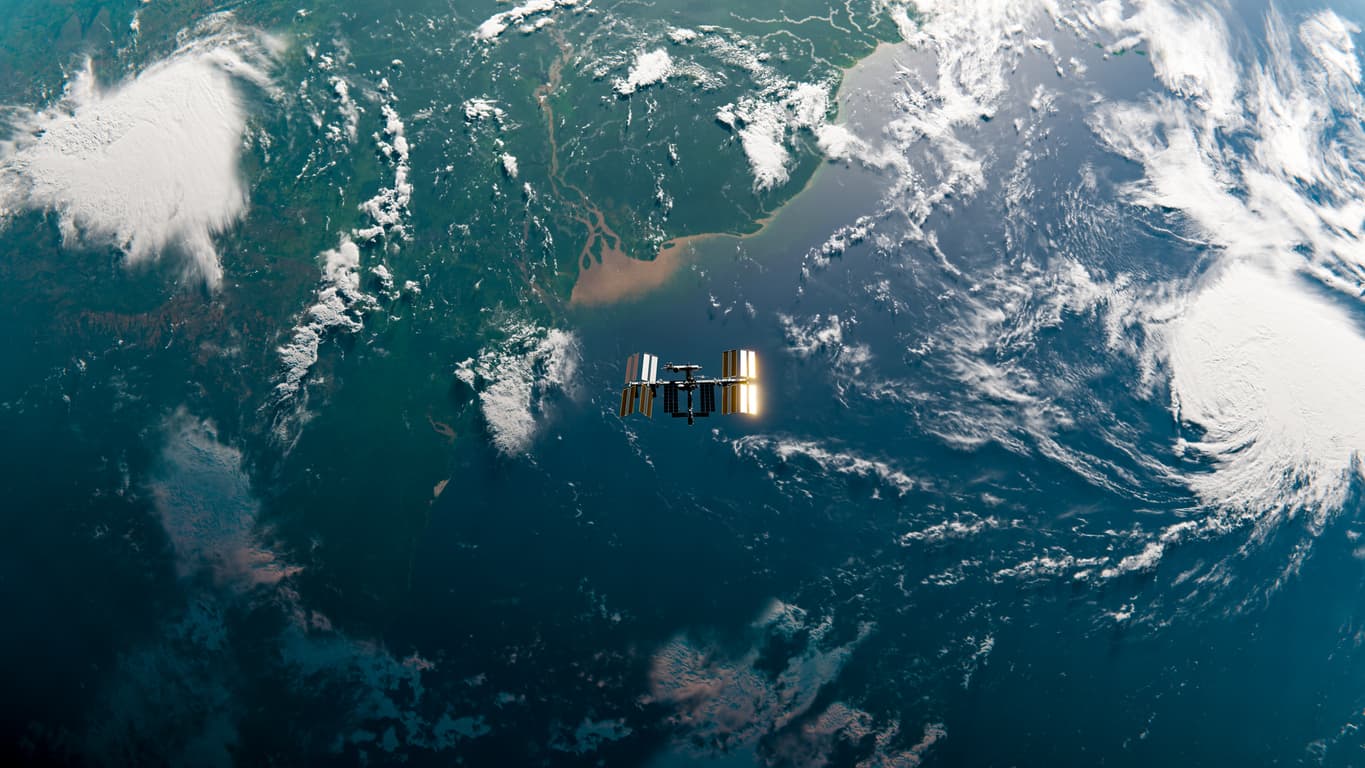
Operating infrastructure in space replaces familiar problems with unfamiliar and often harder ones. The main constraints include:
- High launch costs driven by mass, not footprint
- Limited heat rejection due to vacuum conditions
- Radiation exposure that degrades hardware over time
- No practical maintenance or component replacement
- Latency and bandwidth limits for many workloads
Launch cost remains the most immediate barrier. On Earth, data center design focuses on efficiency per square metre. In space, efficiency per kilogram dominates every decision.
Cooling is often misunderstood. Space is cold, but it is also a vacuum. Heat must be radiated away, not carried off by air or liquid, a challenge highlighted repeatedly in technical analysis.
Radiation accelerates hardware degradation and increases error rates. Maintenance, a routine part of terrestrial operations, is effectively unavailable. Hardware refresh becomes a mission decision rather than an operational one.
Connectivity further limits use cases. Latency varies by orbit. Bandwidth depends on ground station access. Many applications that rely on low, predictable latency remain better suited to Earth-based facilities.
Talent strain on Earth and the space talent problem
Talent is one of the most immediate constraints facing the data center industry, yet it is often underplayed. On Earth, demand for skilled professionals already outpaces supply. Project timelines slip when teams cannot be staffed. Operational risk increases when experience is stretched thin.
Building data centers in space does not remove this problem. It intensifies it.
Orbital infrastructure requires all the skills needed on Earth, plus aerospace engineering, orbital mechanics, radiation hardening, satellite communications, and mission operations. These skill sets are rare, highly specializsed, and already in demand within defence and space sectors.
If the industry struggles to staff projects on Earth, scaling a workforce capable of supporting orbital data centers becomes an even greater challenge.
Why Earth still wins on delivery
When compared directly, space does not remove constraints, it shifts them. Power scarcity on Earth becomes mass and storage limits in orbit. Planning friction is replaced by orbital congestion and debris risk. Water and heat regulation give way to complex thermal radiation challenges.
The difference is maturity. Earth-based data centers benefit from established supply chains, proven delivery models, and a deep global workforce. The constraints are real, but they are understood and manageable.
At LVI Associates, we see this every day. Successful projects depend on aligning the right expertise to the right phase of delivery. We support clients across data centers, energy, and critical infrastructure because these systems are now tightly linked. Power challenges require energy specialists. Delivery risk depends on experienced construction and commissioning teams. Long-term performance relies on operational expertise that extends well beyond handover.
Speak to LVI Associates
If power access, delivery timelines, or talent availability are limiting your data center strategy, progress depends on people. Capital and concept only go so far without the expertise to execute.
At LVI Associates, we help clients secure specialist talent across the full lifecycle, from early site strategy and grid engagement through construction, commissioning, and long- term operations. If you are planning, building, or operating data center capacity and need experienced professionals to support delivery with confidence, request a call back and speak directly with our team.
Space may serve niche and highly specialized use cases in the future. However, scalable digital infrastructure, for the foreseeable future, is still built on Earth, gravity included.