July 2026Keith Ng5 mins read
Microfluidic Cooling: The Next Shift in Data Center Cooling
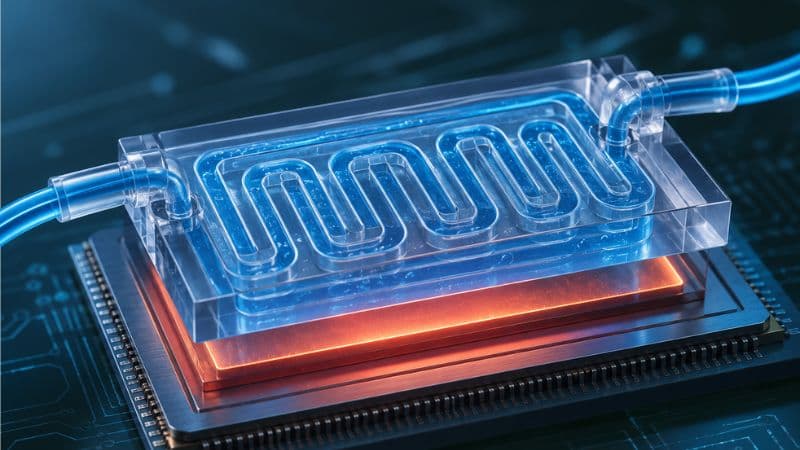
Microfluidic cooling is gaining attention as AI data centers push beyond the limits of traditional cooling. Higher rack densities, hotter chips, and rising energy demands are forcing operators to rethink how heat is removed from critical infrastructure.
Traditional cooling methods still have a role, but they may not be enough for the next generation of high-density AI infrastructure. As AI workloads grow, data centers need to manage more heat in less space, and that shift is changing the skills employers need.
To explore what this means for hiring, LVI Associates caught up with Keith Ng, Associate Vice President at LVI Associates based in APAC, for his insight into how advanced cooling technologies could shape data center recruitment.
As cooling becomes more closely tied to chip performance and facility design, employers will need talent that understands the full data center lifecycle. The challenge is not only finding engineers who know cooling systems, but building teams that can connect design, commissioning, operations, and long-term performance.
LVI Associates works with businesses across the data center lifecycle, helping them secure the professionals needed to deliver high-performance facilities. Learn more about our data center recruitment expertise.
What is microfluidic cooling?
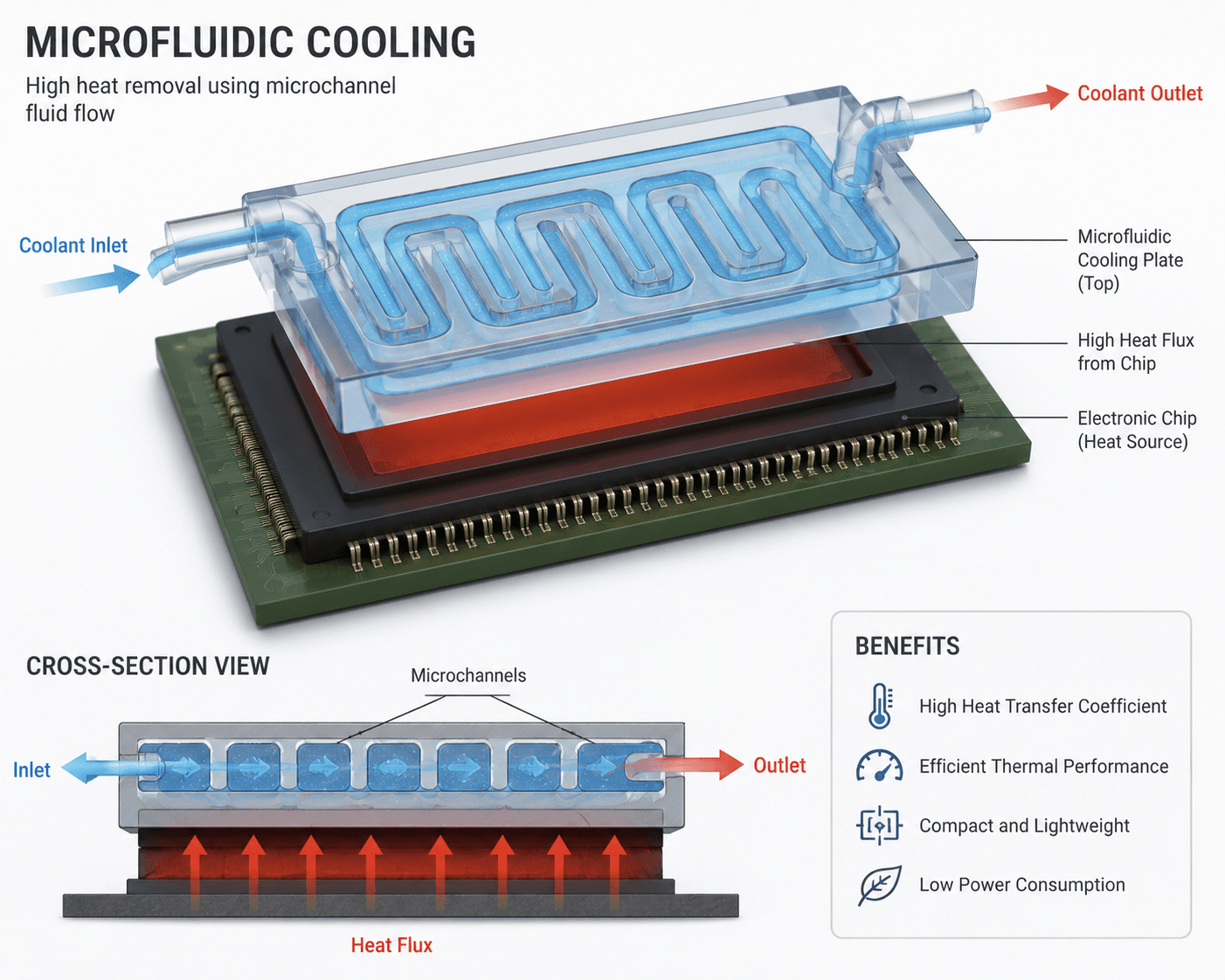
Microfluidic cooling is a way of cooling chips using very small channels that carry liquid close to the hottest parts of the chip. Instead of relying only on air, fans, or cooling plates above the chip, this approach brings cooling much closer to where heat is created.
For AI data centers, this matters because GPUs and AI accelerators produce intense heat. If that heat is not controlled, equipment can slow down, use more energy, or become less reliable.
Microfluidic cooling gives engineers a more direct way to manage heat inside high-performance systems.
Why data centers need better cooling
AI has changed what data centers need to handle. Older data centers were built around lower-density servers and more predictable workloads. AI facilities are different. They use dense racks filled with GPUs, high-speed networking, and high-power equipment.
With the rise of HPC and AI-driven workloads, power densities are increasing significantly, driving a shift toward liquid-based cooling solutions. Microfluidic cooling represents the next evolution, offering more precise and efficient thermal management at the chip level.
This creates more heat in each rack. It also creates hot spots inside chips, where some areas become much hotter than others. These hot spots can affect performance and increase the risk of equipment issues.
Cooling is now linked directly to data center performance. If cooling cannot keep up, the site may not get full value from its AI hardware.
How much cooling do data centers use today?
Cooling is already a major part of data center energy and infrastructure planning. There is no single global figure for installed cooling capacity because operators do not report cooling equipment in a standard way. However, energy use gives a clear indication of scale.
The International Energy Agency tracks cooling as one of the main categories of data center electricity consumption, alongside servers, storage, networks, and other infrastructure.
Most data centers still rely heavily on air-based cooling, especially for standard enterprise and cloud workloads. Liquid cooling is growing, but it remains less common than air cooling. Uptime Institute’s 2025 Cooling Systems Survey found that direct liquid cooling adoption remains gradual, with many operators still relying on traditional air cooling for IT equipment.
The market is moving quickly. Grand View Research valued the global data center liquid cooling market at USD 6.7 billion in 2025 and projects it could reach USD 29.5 billion by 2033.
That growth reflects a wider shift. As AI racks become denser, data centers will need more advanced cooling methods, including direct-to-chip cooling, immersion cooling, two-phase systems, and chip-level approaches such as microfluidic cooling.
For operators, the question is not only how much cooling is installed today. It is how quickly existing systems can adapt to higher-density workloads.
How does microfluidic cooling compare with other cooling methods?
Data centers will not move to one cooling method overnight. Most will use a mix of technologies depending on the site, workload, cost, and operating model.
| Cooling method | What it does | Main benefit | Main challenge |
| Air cooling | Uses fans and airflow to cool servers | Simple and widely used | Struggles with very dense AI racks |
| Rear-door heat exchangers | Uses a liquid-cooled rack door to remove heat | Useful for upgrades | Still depends on air inside the rack |
| Direct-to-chip cooling | Uses liquid-cooled plates on CPUs, GPUs, or accelerators | Strong option for AI racks today | Still cools from outside the chip package |
| Immersion cooling | Places servers in a special non-conductive liquid | Handles high heat loads | Harder to maintain and service |
| Two-phase cooling | Uses fluid that boils and condenses to remove heat | Strong heat removal potential | More complex to manage |
| Microfluidic cooling | Moves coolant through tiny channels close to the chip | Targets heat at the source | Harder to manufacture and scale |
Microfluidic cooling stands out because it tackles heat closer to the chip itself. That makes it promising for future AI systems, but it also makes it more complex than standard cooling upgrades.
Has microfluidic cooling been tested?
Yes. Microfluidic cooling has already been tested by major organisations, but it is not yet common in mainstream data centers.
Examples include:
- DARPA’s ICECool program, which explored ways to cool chips from inside the substrate, chip, or package rather than relying only on external cooling systems.
- Microsoft’s in-chip microfluidic cooling test, which used a server running a simulated Teams workload. Microsoft reported that the approach removed heat up to three times better than current cold plate methods.
- IBM Research, which has studied how microfluidic cooling could work with future chip designs and backside power delivery.
- Georgia Tech, which patented microfluidic cooling technology that led to the startup EMCOOL.
- Qorvo and Lockheed Martin, which have worked on chip-level cooling through DARPA-backed research.
- TSMC, which has explored liquid cooling for advanced chip packaging.
These examples show that microfluidic cooling is no longer theoretical. The bigger question is how quickly it can move from specialist testing into wider commercial use.
Why microfluidic cooling could matter for the future
Microfluidic cooling could support the next stage of AI infrastructure because chips are becoming more powerful, compact, and difficult to cool. As more memory and processing power are packed into smaller spaces, cooling from outside the chip package may not always be enough.
By managing heat closer to the source, microfluidic cooling could help data centers run high-performance equipment more efficiently. It may also help reduce overheating, improve reliability, and allow higher rack density.
For operators, the business case is clear. AI hardware is expensive. Better cooling can help protect that investment by supporting more consistent performance.
What does this mean for data center setup?
Microfluidic cooling is not a simple plug-in upgrade. It affects the full data center environment.
Facilities may need new liquid cooling systems, sensors, pumps, filtration, leak detection, and monitoring. Racks may need different connections and service processes. Server manufacturers may also need to design hardware around liquid-cooled components from the start.
This means operators need to think about cooling earlier in the planning process. It cannot be treated as a late-stage design decision. For AI-ready data centers, cooling needs to sit alongside power, layout, commissioning, and long-term operations planning.
What does this mean for the supply chain?
Microfluidic cooling will also affect the supply chain. It brings together chipmakers, advanced packaging companies, server manufacturers, cooling specialists, and data center operators. That creates new dependencies across already complex AI infrastructure projects.
Chips may need to be designed with cooling built in. Servers may need more testing before deployment. Cooling equipment, fluids, pumps, seals, and sensors will need to meet high reliability standards.
Tiny cooling channels can also be affected by contamination, clogging, or poor fluid quality. Operators will need strong supplier support, clear maintenance processes, and robust warranty terms.
As this technology develops, data center supply chain teams will play a bigger role in keeping projects on track. They will need to source specialist components, manage supplier risk, and work closely with engineering teams to avoid delays.
The supply chain will need time to mature before microfluidic cooling becomes common across commercial data centers.
Does microfluidic cooling affect water use?
Yes, but the impact depends on the wider cooling system. Microfluidic cooling can use a closed loop, where coolant circulates through the system rather than being constantly replaced. This can reduce direct water use compared with some evaporative cooling methods.
Microsoft has said its newer closed-loop liquid cooling designs can avoid evaporating water for cooling and may avoid more than 125 million litres of water per year per data center.
However, the heat still has to go somewhere. A facility may still use chillers, dry coolers, cooling towers, district cooling, or heat reuse systems. If the wider data center still relies on evaporative cooling, water use may remain a concern.
There is also water use outside the data center. EESI notes that a data center’s water footprint includes water used on site, water used by power plants that supply electricity, and water consumed during processor chip manufacturing.
This matters in regions where data center growth overlaps with pressure on power, land, and water resources. It also matters where semiconductor manufacturing plays a major role in the wider technology supply chain.
What does this mean for recruitment?
Microfluidic cooling creates a talent challenge. Data centers already need electrical engineers, mechanical engineers, commissioning specialists, facilities teams, and operations leaders.
As liquid cooling becomes more important, employers will also need people with knowledge of thermal systems, coolant management, high-density infrastructure, and reliability testing.
The companies that will move fastest are the ones treating cooling expertise as part of their core infrastructure strategy, not as a late-stage technical requirement. As data center environments become more specialized, hiring plans need to account for the people who can connect design decisions with long-term operational performance.
This will increase demand for people who can work across different technical areas. The strongest candidates may come from data centers, advanced manufacturing, semiconductor firms, cooling suppliers, energy businesses, or high-performance computing.
As cooling systems become more advanced, employers will need teams that can connect design, commissioning, operations, and long-term performance.
For companies planning new facilities or scaling AI-ready infrastructure, hiring cannot wait until project delivery. Roles linked to commissioning, cooling systems, facilities operations, reliability, and high-density infrastructure are likely to become harder to secure as liquid cooling adoption grows.
LVI Associates supports employers with data center staffing solutions across design, construction, commissioning, and operations, as well as data center commissioning recruitment for testing, handover, and critical delivery phases.
Request a call back to discuss hard-to-fill data center roles, future cooling skills, and the talent needed to deliver AI-ready infrastructure.