

Women Driving the Future of Renewable Energy: Key Lessons on Career Growth, Leadership and Retention
June 20264 minutes read
Women Driving the Future of Renewable Energy: Key Lessons on Career Growth, Leadership and Retention
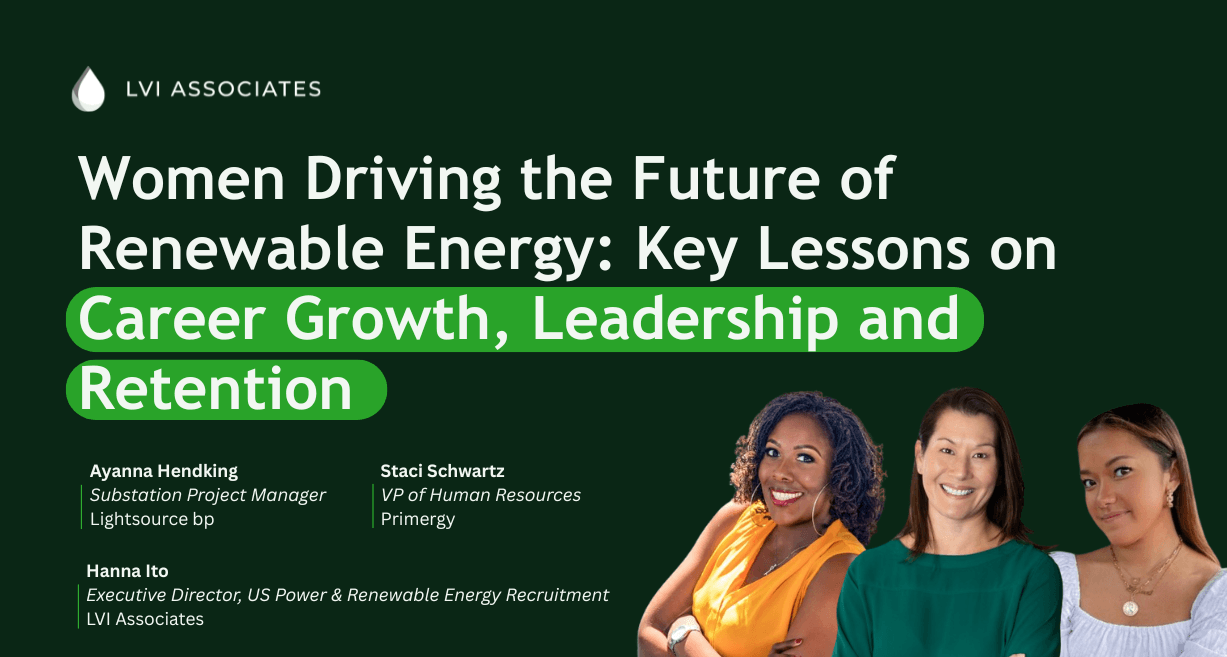
As the renewable energy sector continues to grow, conversations around diversity have evolved beyond recruitment alone. The focus is increasingly shifting toward retention, career development, and creating workplaces where women can build long-term, successful careers.
To mark International Women in Engineering Day, LVI Associates hosted Powering Progress: Women Driving the Future of Renewable Energy, bringing together industry leaders to discuss the realities of career progression and leadership development as a woman, and what organizations can do to better support women across the sector.
Moderated by Hanna Ito, Executive Director of US Power & Renewable Energy Recruitment at LVI Associates, the panel featured Ayanna Hendking, Substation Project Manager at Lightsource bp, and Staci Schwartz, Vice President of Human Resources at Primergy.
Here’s what the conversation made clear - and why it matters for the future of renewable energy.
Attracting talent is only half the battle
Many organizations have made meaningful progress in attracting more women into renewable energy. Primergy, a solar energy developer, owner, and operator, for example, has a 47% female workforce. While this is an impressive statistic, panelists made it clear that hiring is only the first step.
You can be made up of 47% women, but then you have to give them what they need to succeed in that business long term.
Staci explained that while representation matters, long-term success depends on creating an environment where employees feel supported throughout different stages of their careers and lives.
For employers, that means looking beyond recruitment metrics and considering factors such as mentorship, flexibility, family support programs, professional development opportunities, and pathways to leadership.
The distinction between attraction and retention became one of the webinar's defining themes. Building a diverse workforce requires intentional hiring efforts, but sustaining that diversity requires an equally intentional employee experience.
For employers looking to benchmark their talent strategy against the wider market, LVI Associates' USA Renewable Energy, Power Delivery & Transmission Compensation Guide 2026 provides insights into salary trends, workforce priorities, and the factors influencing attraction and retention across the sector. As competition for skilled professionals continues to intensify, understanding how compensation, benefits, and career development opportunities compare to market expectations can help organizations build more effective long-term talent strategies.
Authenticity matters in employer branding
For organizations trying to attract female talent in renewable energy, it can be tempting to highlight every benefit, career pathway, or culture initiative during the hiring process. But the panel emphasized that companies should only promote what they can genuinely deliver.
Setting expectations around opportunities that do not materialize can create frustration, damage trust, and lead to avoidable turnover. For hiring leaders, this is especially important in a competitive talent market, where replacing the same role six months later can cost valuable time, resources, and credibility.
The strongest employer brands are built on authenticity. Candidates are not only evaluating what a company says during the interview process, they are also assessing whether those promises match the lived employee experience once they join.
For clients and hiring managers, the takeaway is clear: be transparent about where your organization is today, what support systems already exist, and where improvements are still being made. Authenticity is far more effective than overpromising, especially when the goal is long-term retention.
Career growth requires more than technical expertise
Technical skills remain essential in engineering and renewable energy, but career advancement often depends on a broader set of capabilities.
Throughout the discussion, Ayanna emphasized the importance of communication, relationship-building, and learning how to advocate for yourself professionally.
As projects become larger and more collaborative, professionals must navigate interactions with stakeholders, clients, contractors, and leadership teams. These skills are rarely taught in the classroom, but they often determine long-term career success.
The panel encouraged professionals to actively seek opportunities that stretch them beyond their technical comfort zones, whether through presentations, cross-functional projects, leadership initiatives, or mentorship programs.
Ask about culture, not just projects
When evaluating career opportunities, engineers often focus heavily on technical challenges, project portfolios, and compensation. While those factors matter, Ayanna encouraged candidates to look deeper.
Oftentimes as women, we just focus on the technical side of the projects, but be willing to ask some of those social things, too.
Questions about mentorship, leadership development, parental leave, flexibility, employee resource groups, and promotion pathways can reveal far more about an organization's culture than a job description ever will.
The panel stressed that candidates should evaluate whether they can see themselves growing within an organization, not just whether they can perform the role being advertised.
Green flags to look for during the interview process
The panel encouraged candidates to think beyond compensation and project scope when evaluating potential employers. While job descriptions can tell you what you'll be working on, the interview process often reveals what it's actually like to work there.
So what should candidates look for? Some of the strongest green flags include:
- Clear examples of career progression, where interviewers can explain how employees have grown and advanced within the organization.
- Visible representation in leadership, particularly when women and diverse professionals are present in decision-making roles.
- Mentorship and development opportunities, whether through formal programs or a culture that encourages learning and growth.
- Transparency around flexibility and benefits, including parental leave, caregiving support, and work-life balance initiatives.
- Interviewers who speak candidly about culture, including both strengths and areas the organization is actively working to improve.
The panel also stressed that authenticity matters. Organizations that are honest about their culture, opportunities, and challenges often create a stronger foundation for long-term employee satisfaction than those that overpromise during the hiring process.
Ultimately, candidates should leave the interview process with a clear understanding of not only the role itself, but also whether they can envision building a successful long-term career within the organization.
Small actions can have a big impact
One of the most powerful parts of the discussion focused on confidence, mentorship, and creating opportunities for women early in their careers.
Reflecting on her own experience, Ayanna shared that she was shy early in her career. This perspective shaped a broader conversation about how managers and senior leaders can support emerging professionals.
Often, the most meaningful support comes from simple actions: inviting someone into a conversation, encouraging them to share an opinion, or creating opportunities for visibility and growth.
As Ayanna explained:
Those little nuances can support women early in their careers who may not have the confidence yet to speak up.
While mentorship programs are valuable, the panel emphasized that creating a truly inclusive culture requires everyday actions that help employees feel seen, heard, and supported.
The power of community and networking
The discussion also highlighted the importance of professional networks in supporting career development.
For women working in renewable energy, organizations such as Women of Renewable Industries and Sustainable Energy (WRISE) provide valuable opportunities to connect with peers, mentors, and leaders across the sector, and was specifically recommended by Staci.
In addition to national membership opportunities, many cities host local WRISE chapters that organize networking events, professional development sessions, and community-building initiatives, often free to attend.
Professionals looking to expand their network should also explore local industry groups and renewable energy communities through LinkedIn and regional professional associations.
Continuing the conversation
The renewable energy transition will require not only technical innovation, but also workplaces that enable professionals to thrive throughout their careers.
The conversation between Ayanna, Staci, and Hanna reinforced a simple but important truth: attracting women into renewable energy is only part of the equation. Long-term progress depends on creating environments where women can grow, lead, and build lasting careers.
Find the talent you need
Get in touch with one of our talent specialists, who can offer bespoke and tailored guidance on hiring for your objectives and resourcing plans.
Looking for a new role?
Explore career opportunities with top energy and infrastructure organizations, from established utilities to cutting-edge renewable energy startups.