

February 2026Megan Fletcher
Modular data center delivery is redefining data center roles
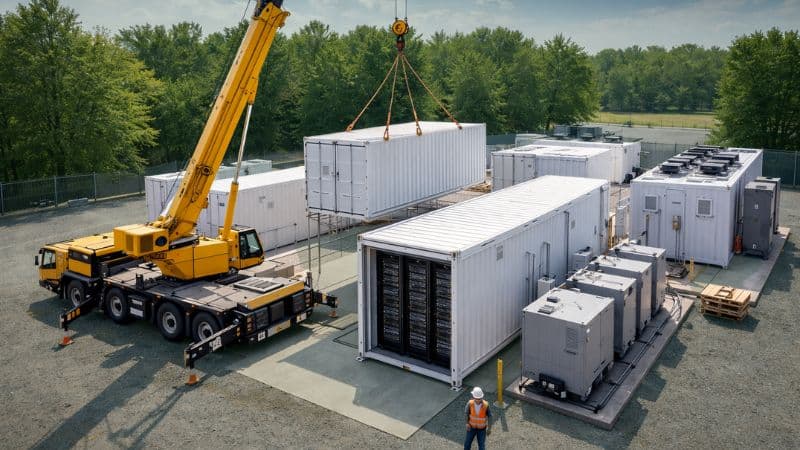
Modular delivery is not changing what data centers need to do. It is changing how we design, build, integrate, and commission them, and that shift is pushing complexity much earlier in the program.
Modular and prefabricated delivery has moved from an alternative approach to a core execution strategy for hyperscale and AI-driven data center programs. For owners focused on speed, scale, and risk control, modular is no longer optional.
The modular data center market was valued at roughly USD 29 billion in 2024 and is expected to exceed USD 70 billion by 2030, driven by hyperscale expansion, AI workloads, and ongoing labor constraints.
As more work shifts offsite, the way data centers are designed, built, integrated, and commissioned is changing. That change is redefining construction roles across the entire project lifecycle.
Why modular delivery is growing
Traditional hyperscale delivery models are struggling to keep up with current demand. AI capacity growth requires faster deployment, repeatability, and the ability to scale in phases without redesigning entire campuses.
Labour availability remains a major constraint across US data center markets. Skilled MEP labour shortages continue to impact schedule certainty. Modular delivery reduces reliance on large onsite crews by shifting work into factory environments where labour can be planned, trained, and deployed more consistently.
Schedule predictability has also become a priority. Factory-led delivery reduces exposure to weather delays, site congestion, and trade stacking. For owners operating at scale, predictability now carries as much weight as speed.
Where are modular data centers growing
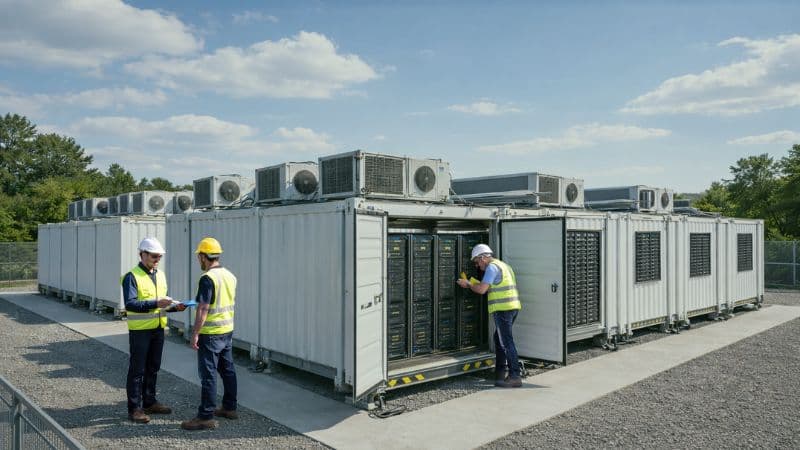
Modular data center growth is accelerating as operators need faster deployment, flexible capacity, and lower upfront build risk. These containerised units support rapid expansion at the edge, within hyperscale campuses, and in remote or infrastructure-constrained locations. Demand is driven by cloud services, AI workloads, and regional data sovereignty.
Key deployments are concentrated in:
- USA, Northern Virginia, Texas [Midlothian, Dallas], Arizona [Phoenix, Mesa], Iowa [Council Bluffs], Oregon [The Dalles], Nevada [Storey County].
- UK, London and Corsham.
- Africa, Nigeria, Ghana, Côte d’Ivoire.
- Australia, supporting edge and mining use cases.
- Latin America, across emerging cloud and colocation markets.
Adoption continues to rise where speed to market, scalability, and power-efficient design matter more than traditional build cycles.
How modular data centers are built
Modular data centers follow a manufacturing-led delivery model rather than a linear site-build approach.
Design teams begin by developing standardised modules for power, cooling, IT, or multi-trade systems. These designs are coordinated early using BIM to lock interfaces, tolerances, and connection points.
Modules are fabricated in controlled factory environments. Electrical, mechanical, controls, and monitoring systems are installed and tested off-site. Factory acceptance testing verifies performance before shipment.
In parallel, site teams complete civil work, foundations, and utility infrastructure. Once modules arrive on-site, they are lifted into position, connected, and integrated. Final commissioning focuses on system integration rather than basic functionality.
This approach pushes risk earlier in the program and resolves issues before they reach the site.
How much faster is modular delivery than traditional hyperscale builds?
Traditional hyperscale data center construction typically follows a long, sequential delivery model. From early work through commissioning, programs commonly run 24 to 36 months, depending on size and complexity.
As outlined in LVI Associates’ Hidden Timeline of Data Center Builds, understanding every phase of delivery shows why traditional schedules stretch and where modular delivery creates time savings.
Modular delivery can reduce overall timelines by 30 to 50%, with many facilities reaching operational readiness in 12 to 18 months, particularly where standardised modules are reused across campuses.
The schedule advantage comes from:
- Parallel factory production and site work
- Reduced onsite labour intensity
- Pretested systems arriving ready for integration
- Shorter commissioning critical paths
- Less late-stage rework
Rather than accelerating individual tasks, modular delivery shortens the entire critical path.
What this means for roles and skills
Modular delivery is changing what construction leadership looks like in data center projects, especially for professionals coming from traditional general contracting backgrounds.
These roles are not becoming MEP-specific. However, a working understanding of MEP systems, integrated project delivery, and commissioning is now expected. Many superintendents, project managers, project executives, and VPs are actively upskilling in these areas as modular and integrated delivery becomes the standard.
Where the impact shows up by role
For superintendents, the shift shows up in earlier involvement. Field leaders are now engaged sooner to plan installation readiness for factory-built systems, manage tighter tolerances onsite, and support commissioning activities that start well before full system energisation.
For project managers, modular delivery raises the bar on integration. PMs are expected to understand how mechanical, electrical, and controls systems come together across factory and site environments, and how those decisions affect commissioning outcomes.
At the executive level, modular and integrated delivery reframes risk. Project executives and VPs are evaluating how offsite fabrication and early commissioning improve safety, compress schedules, and reduce onsite congestion, while maintaining control over quality and handover.
Why commissioning matters more now
Offsite and factory-based commissioning is a key part of this shift. Testing systems in controlled environments improves safety, shortens delivery timelines, and reduces late-stage surprises onsite. Operators such as Compass Data Centers are pushing this model as they scale, signalling where the broader market is headed.
Construction leaders who can connect traditional GC execution with modular delivery, early commissioning, and integrated project delivery are increasingly trusted with the most complex data center programs.
Tradeoffs and emerging challenges
Modular construction does not remove risk. It changes when and where it shows up. Work that would normally be resolved during late-stage site activities is locked in much earlier, often with limited flexibility once production starts.
Upstream decisions carry more weight. Once modules enter fabrication or transit, the ability to correct design, tolerance, or sequencing issues drops fast. Transportation and site access planning become critical path activities. Permitting, route constraints, crane capacity, laydown space, and delivery windows directly affect installation order and commissioning timelines.
When modules arrive late, incomplete, or out of tolerance, the impact is immediate. Multiple workstreams can be affected at once, with fewer options to recover time through site-based adjustments. Schedule float that once lived in field activities is largely gone.
Factory testing improves consistency and reduces rework, but it does not remove onsite commissioning risk. Differences in utility supply, environmental conditions, and interfaces with site-built systems often surface only during live testing. Modular programs also face ownership gaps during commissioning. If responsibility between manufacturers, installers, and commissioning teams is not clearly defined, issue resolution can stall, and handover can slip.
Programs that perform best treat these risks as structural, not incidental. They plan for earlier issue exposure, tighter decision windows, and clearer accountability long before modules are built or shipped.
Modular data center recruitment
At LVI Associates, this shift is visible in nearly every hiring conversation. Clients are no longer hiring solely for traditional site-based experience. They are looking for construction leaders who can operate across the full modular delivery lifecycle, including:
- Understanding how modular systems are designed and standardised
- Experience working with factory-built and off-site assembled components
- Ability to integrate modular systems seamlessly into live site conditions
- Early involvement in commissioning and system integration planning
Superintendents, project managers, project executives, and VPs who can operate across these phases are increasingly trusted with the largest and most complex data center programs.
For organisations scaling hyperscale or AI capacity, securing the right talent early can remove months of delivery risk and improve predictability across the program lifecycle. If you are planning upcoming modular or prefabricated data center programs and want to discuss building teams with the right hybrid skillsets, request a call back with LVI Associates’ specialist data center construction team.
For professionals, modular delivery is opening opportunities to larger, faster-moving, and more technically complex projects. If you are considering your next data center role and want to align your experience with where the market is heading, register your resume to LVI Associates or explore our current data center opportunities.